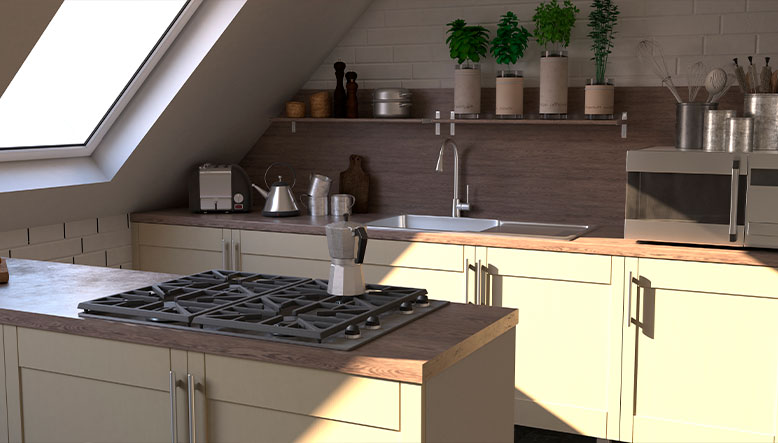
Have you ever wondered how to transform your kitchen into a modern, open space? The answer may lie in removing the tall cabinets, creating a feeling of spaciousness and lightness in the kitchen.
In this article, we will discuss some tips and tricks on how to decorate a kitchen without upper cabinets and how to achieve a more airy and functional kitchen.
Let natural light in
Integrating natural light into kitchen design is a transformative approach, especially in a space without tall cabinets. The absence of tall cabinets allows light to flow unobstructed throughout the room, creating an open and expansive atmosphere.
By keeping windows unobstructed, natural light can flood the space, enhancing the feeling of openness and visual lightness. It is an ideal opportunity to use the window sill as an impromptu display or storage space for plants, cookbooks, or decorative objects, adding a touch of nature and a personal element to the space.
In addition to welcoming natural light, strategically placing mirrors or reflective surfaces can further contribute to the illusion of a more spacious and airy kitchen. The ability of these features to bounce and amplify available light is a valuable design consideration that can significantly impact the overall feel of the room. Furthermore, the seamless integration of the kitchen with the adjoining living or dining area, often achieved in open-concept designs, allows for the unobstructed flow of natural light throughout all interconnected spaces, creating a harmonious and cohesive living environment.
Optimize storage
Optimizing storage is a fundamental aspect of designing a kitchen without tall cabinets. This involves a strategic and thoughtful approach to maximizing the available space in base cabinets, while exploring innovative and efficient storage solutions.
In the absence of upper cabinets, the focus shifts to making the most of lower cabinets by incorporating deep drawers, pull-out trays, and organizers that facilitate the orderly arrangement of kitchen essentials. These elements not only improve the accessibility of objects but also contribute to creating an organized and functional workspace.
In addition to conventional storage in base cabinets, integrating a tall pantry cabinet or floor-to-ceiling cabinet can serve as a valuable resource to compensate for the lack of wall cabinet space. This vertical storage solution, which can be customized to accommodate a wide variety of items, has the potential to effectively meet kitchen storage needs while maintaining a visually clean and uncluttered look. Furthermore, the strategic placement of open shelving in the available vertical space can offer additional storage and display opportunities, further contributing to the efficient utilization of the kitchen footprint.
Use open shelving
Open shelving, characterized by its uncluttered and airy design, emerges as a compelling alternative for enhancing both the aesthetic and functional aspects of a kitchen without upper cabinets. The incorporation of open shelves offers the possibility of displaying a wide variety of objects, such as a carefully curated selection of cookbooks, elegant tableware, and decorative accents, infusing the space with a personalized and welcoming touch.
The transparency of the open shelving design not only adds an element of visual lightness, but also promotes a feeling of spaciousness and airiness in the kitchen, contributing to a more expansive and fluid environment.
Strategically placing open shelving at different heights and ensuring a thoughtful arrangement of objects can further accentuate the visual impact of the shelving while promoting an organized and well-utilized space.
The careful selection and display of items on open shelves creates an attractive and dynamic focal point within the kitchen, offering an opportunity for artistic expression through the arrangement of colors, patterns, and textures.
In addition, the incorporation of supplementary storage solutions, such as decorative baskets or hanging shelves, can be seamlessly integrated with open shelving, providing additional functional and decorative elements to the kitchen design.
Choose light, neutral colors
The selection of color schemes plays a key role in establishing the desired atmosphere and visual impact of a kitchen, especially if it lacks upper cabinets. Opting for a palette of light, neutral tones on the walls, cabinets, and countertops serves as a powerful tool for amplifying the perception of space and brightness in the kitchen.
The use of soft whites, pale grays, or light beiges can help create a serene and airy atmosphere, making the kitchen appear more spacious and welcoming. In addition, the use of these tonal colors can contribute to a timeless and versatile aesthetic, providing a seamless backdrop for various decorative elements and design accents.
In addition, incorporating reflective finishes, such as high-gloss cabinets or polished countertops, can complement the range of light and neutral colors, serving to enhance the dispersion of natural and artificial light within the kitchen.
This fusion of light colors and reflective surfaces not only maximizes the potential for natural light penetration, but also cultivates a sense of brightness and visual openness within the culinary space. By harmonizing the color palette with other design elements, such as flooring and accessories, a cohesive and sophisticated look can be achieved, underscoring the expansive and contemporary feel of the kitchen.
Incorporate lightweight materials
The introduction of light and airy materials into kitchen design is a key consideration for achieving a seamless and visually light aesthetic, particularly in the context of a kitchen without upper cabinets.
Using natural, translucent materials such as finely grained wood, elegant glass, or delicate metallic accents can imbue a space with a sense of modern elegance and a discreet, transparent quality. The use of these materials, whether in the form of cabinets, shelves, or decorative elements, serves to cultivate an atmosphere of visual and tactile lightness, aligning with the overall goal of creating an open and expansive culinary environment.
Furthermore, the strategic integration of these materials, together with the use of abundant natural light and an open design, can accentuate the fluidity between the different functional and visual components of the kitchen.
For example, the use of a natural wood island or a delicately forged metal lamp can introduce a touch of organic sophistication and visual interest, further enhancing the contemporary and airy character of the kitchen. Through the careful selection of a harmonious fusion of light and natural materials, the kitchen can be imbued with a timeless and welcoming charm, reflecting a balance between modern design sensibility and enduring warmth.
Hanging decorative lamps
The strategic incorporation of decorative pendant lamps presents an opportunity to infuse the kitchen with visual interest and ambient lighting, especially in the context of a kitchen lacking upper cabinets.
The selection and placement of these decorative elements can be used as functional lighting solutions and captivating design accents, contributing to the overall ambiance and visual intrigue of the space.
Whether suspended over a kitchen island or dining area, carefully chosen pendant lights can introduce a sculptural dimension to the kitchen while casting a warm, inviting glow, maintaining a sense of visual lightness and openness.
In addition, careful consideration of the design and materiality of pendant lamps, with an emphasis on light and airy constructions, can further accentuate the ethereal and contemporary character of the kitchen.
Lamps made from transparent or semi-transparent materials, such as glass or woven natural fibers, can contribute to visually unobtrusive and liberating lighting, aligning with the overall design intent of creating a spacious and modern culinary environment.
By carefully integrating these decorative lighting elements into the kitchen design, you can achieve a harmonious and captivating interplay of light and visual interest, emphasizing the distinctive and welcoming character of the kitchen.
Blend in with the rest of the room
Ensuring a coherent and harmonious integration of the kitchen with the adjoining living or dining area is a key consideration when designing a kitchen without upper cabinets. By carefully harmonizing the color palette, material selection, and design language between the kitchen and adjoining spaces, a sense of unity and continuity can be established, contributing to a seamless, integrated living environment.
This can be achieved through the use of shared or complementary design elements, such as coordinated color accents, uniform flooring materials, or a consistent selection of decorative accessories, fostering a visually cohesive and interconnected spatial experience.
In addition, the strategic alignment of functional and decorative elements, such as the design of the kitchen island or the selection of countertop finishes, with the corresponding elements in the adjacent living or dining area can further solidify the visual connection between the spaces.
For example, using a consistent countertop material between the kitchen and dining room can create a harmonious visual flow, while incorporating similar decorative accessories or lighting fixtures can contribute to a sense of thematic cohesion and spatial integration.
By maintaining a harmonious design approach that reflects a conscious consideration of the interconnected nature of living spaces, the kitchen can coexist seamlessly with the wider living environment, cultivating a cohesive and welcoming whole.
Use textiles and decorative objects
The integration of carefully selected textiles and decorative objects is a fundamental mechanism for infusing warmth, texture, and personalized character into a kitchen without upper cabinets. Through the deliberate selection and introduction of textiles, such as vibrant dish towels, tactile rugs, or visually appealing tablecloths, the kitchen can be imbued with a sense of tactility and homey comfort.
The careful selection of decorative objects, encompassing a wide range of vases, art pieces, and intricately designed utensils, further enriches the visual tapestry of the kitchen, introducing layers of personality and expressive details that resonate with the narrative of the overall design.
By strategically incorporating these textiles and decorative objects into the kitchen’s predominant color palette and design language, you can foster a sense of careful, lived-in elegance that reflects a well-considered and welcoming environment.
In addition, the use of textiles and decorative elements can serve to introduce subtle touches of color, pattern, and visual interest, enriching the kitchen’s aesthetic and creating opportunities for expressive and personalized decoration.
Whether displayed on open shelves, adorning tables, or instilling a sense of luxury with carefully arranged tableware, the integration of textiles and decorative objects serves as a powerful means of establishing a kitchen that is not only functional but also imbued with warmth, charm, and visual appeal.
Integrating decoration and functionality
The seamless integration of decorative elements with functional components within a kitchen devoid of upper cabinets represents a fundamental design consideration, allowing for the creation of a space that is not only visually captivating, but also highly practical and efficient.
By carefully selecting and arranging decorative objects near essential kitchen utensils and tools, you can achieve a harmonious interaction between form and function, infusing the space with a sense of intentional and carefully crafted design.
Careful attention to the arrangement of items, such as a thoughtful selection of vibrant spices alongside attractive and accessible storage containers, reflects a harmonious synthesis of decorative and functional elements, emphasizing the distinctive character and usability of the kitchen.
In addition, the integration of practical and visually appealing storage solutions, such as decorative jars, stylish kitchen utensils, and contemporary kitchen gadgets, serves to enhance the efficiency of the kitchen while contributing to its overall aesthetic appeal.
The strategic placement of these elements, whether on open shelving, a custom-designed shelf, or integrated into the kitchen island design, reflects a well-considered approach to harmonizing decorative and functional aspects.
Furthermore, the deliberate selection and display of carefully chosen cookbooks, culinary utensils, and strategically placed artwork contribute to creating a narrative of culinary passion and meaningful livability, imbuing the kitchen with a sense of visual and practical enrichment that resonates with the needs and preferences of its inhabitants.
Conclusion
In conclusion, decorating a kitchen without upper cabinets can greatly improve the visual spaciousness of the room. By incorporating elements such as abundant natural light, efficient storage solutions, and a clean design, you can create a minimalist and modern kitchen.
Use a cohesive color palette, employ lightweight materials, and integrate with surrounding living spaces to achieve a harmonious and functional kitchen. With careful planning and attention to detail, a kitchen without upper cabinets can be aesthetically pleasing and highly functional.