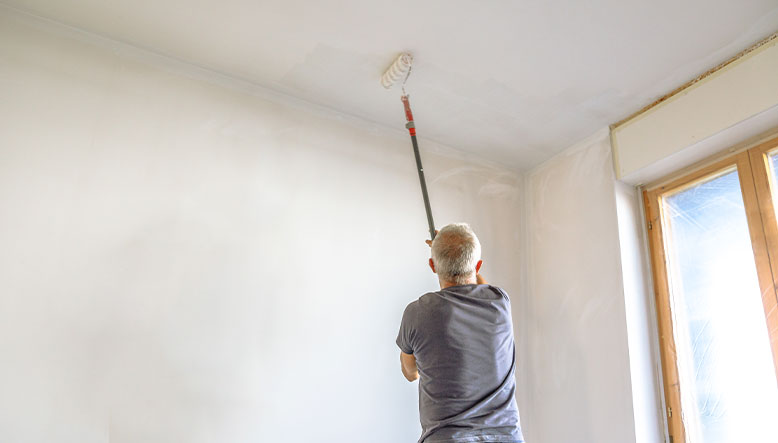
In this article, we will give you some tips and recommendations on how to paint ceilings to achieve a professional and long-lasting finish.
We will guide you on how to prepare the space and select the right tools, as well as on how to apply the paint and additional tips.
With these tips, you can transform the look of any room by painting its ceiling with confidence and skill.

Prepare the space and surface
When it comes to painting the ceiling, taking the time to properly prepare the space and surface is crucial to achieving a flawless, long-lasting result. Before you begin, it is essential to protect the area where you will be working.
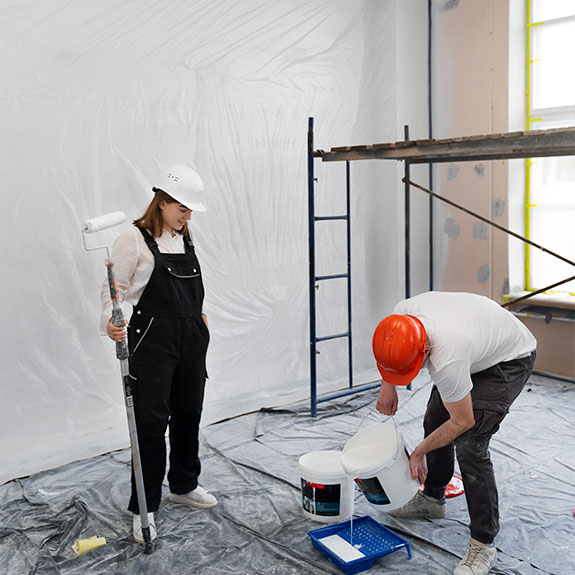
Start by removing or covering furniture with cloths to prevent paint stains. It is also essential to protect the floor with plastic or paper to prevent accidental spills or drips.
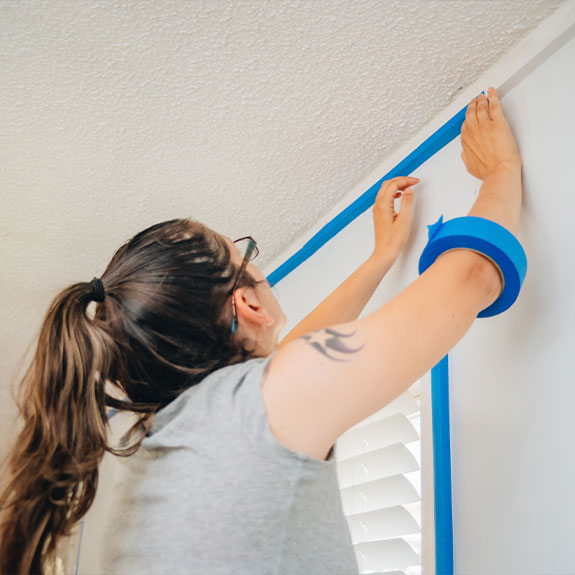
To ensure professional-looking results, use painter’s tape along the edges where the ceiling meets the walls to create clean, sharp lines and prevent paint from smudging on the walls.
Thoroughly cleaning the ceiling is a fundamental part of the preparation process. It is important to remove dust, cobwebs, and debris that has accumulated to ensure that the paint adheres properly.
A vacuum cleaner or damp cloth can effectively remove loose particles. Inspect the ceiling for cracks or imperfections, and repair them with a suitable filler and by gently sanding the surface once dry.
This step will help you create a smooth, even surface for the paint to adhere to and will result in a more professional finish.
Protect furniture and flooring
Protecting the furniture and flooring in the room you are painting is a vital part of the preparation process. Not only does it prevent damage, but it also makes the entire painting process more efficient.
To protect furniture, consider removing it from the room; if this is not possible, be sure to cover it with durable, waterproof cloths or plastic sheets, securing them tightly to prevent slipping or accidental spills.
For the floor, use painter’s tape or old sheets to cover the entire area and catch any drips or spills, ensuring that your workspace remains clean and free of paint stains.
Taking the time to properly protect the surrounding areas will save you the extra work of cleaning up and fixing any accidental paint marks or stains, and allow you to focus solely on the task at hand without worrying about damage to furniture or flooring.
Roof cleaning and repair
Once the surrounding areas have been prepared and protected, it is essential to focus attention on the ceiling itself. The surface must be thoroughly cleaned and any imperfections, such as cracks or holes, must be repaired to ensure a smooth and flawless finish.
Use a vacuum cleaner or damp cloth to remove dust and debris, and take your time to carefully inspect the ceiling for signs of damage. Once identified, fix these problems by applying a suitable filler and allowing it to dry completely.
Once the putty has dried, gently sand the area to create a smooth, even surface, ensuring that any imperfections are completely corrected before beginning the painting process.
Selecting the right tools and materials
Selecting the appropriate tools and materials is essential to ensuring a satisfactory, professional-looking paint job on your ceiling. When it comes to painting tools, choosing high-quality materials can significantly influence the final result.
For smooth ceilings, a short-nap roller is the ideal choice, as it provides even coverage. On the other hand, for textured ceilings, such as stucco or popcorn finishes, a long-nap roller is recommended to effectively reach and coat uneven surfaces.
In addition, a high-quality paint roller with a telescopic handle is invaluable for working on high ceilings, as it allows you to reach the entire surface and paint it easily and efficiently.
Roller suitable for the surface
Using the right roller for the specific texture of the ceiling is vital to achieving the best possible result. A short-nap roller is suitable for smooth or slightly textured ceilings, as it helps to create a uniform, professional-looking finish.
In contrast, a long-pile roller is designed for use on highly textured ceilings, as the elongated fibers can effectively reach into the gaps in the texture, ensuring complete and even coverage.
By selecting the right roller for the surface, you can be sure that the paint will be applied evenly and effectively, resulting in a high-quality, durable finish.
Quality roller and extension pole
Investing in a high-quality paint roller and extension pole is essential for achieving a flawless and efficient painting process, especially when working on ceilings.
A good quality roller will not only provide smooth and even application, but will also contribute to a more efficient painting process, reducing the need for frequent repainting or touch-ups.
Attached to an extension pole, a high-quality roller allows you to paint ceilings effortlessly and accurately, even in rooms with high or difficult access points.
This combination of tools is essential for achieving professional-looking results and can make the task of painting the ceiling a more efficient and less laborious process.
Applying the paint
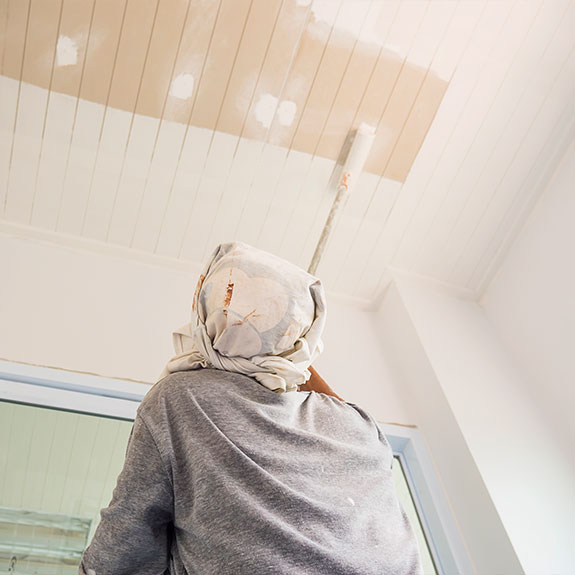
Once you have finished preparing and gathered all the necessary materials and tools, it is time to start painting the ceiling. Before applying the paint, it is advisable to start with a primer, especially if the ceiling is new or has stains or discoloration.
Primer not only improves paint adhesion, but also helps create a uniform and consistent base, especially when dealing with previously painted or repaired surfaces.
Una vez aplicada y seca la imprimación, puedes empezar con la primera capa de pintura, utilizando una pintura específica para techos de alta calidad para un acabado limpio y profesional.
When it comes to the application process, it is recommended to work in a “W” pattern, starting at the corner of the ceiling and then filling in the rest of the surface.
This technique ensures that the paint is distributed evenly and helps to avoid visible overlap or roller marks, contributing to a more uniform and professional finish. It is important to work systematically and carefully, paying special attention to edges and corners, where precision is essential for a flawless end result.
To avoid drips or excess paint, try not to overload the roller and always work with constant, moderate pressure for smooth, controlled application.
Print when necessary
Applying a primer before painting the ceiling, especially in the case of new or previously unpainted surfaces, is a fundamental step in the process.
Using a primer helps seal the surface, improving paint adhesion and ensuring a consistent, uniform finish.
Furthermore, in situations where the ceiling has stains, marks, or discoloration, applying a suitable primer can effectively conceal these imperfections, resulting in a more professional and visually appealing finish.
By recognizing the need for primer and using it when necessary, you can effectively solve specific problems and lay a solid foundation for subsequent coats of paint, ultimately contributing to a more professional and durable result.
Use the “W” pattern technique
Using the “W” pattern technique when painting the ceiling is a very effective method for ensuring smooth and even paint application.
This approach, which involves creating a “W” shape with the roller and then filling in the remaining areas, allows for efficient and consistent coverage, minimizing the possibility of visible roller marks or uneven areas.
By following this pattern, you can effectively control the application of the paint, resulting in a professional and visually appealing finish across the entire ceiling surface.
In addition, this technique contributes to a more rational and systematic painting process, especially on large or extensive ceiling surfaces, where maintaining a uniform and controlled application is essential to achieving the best possible results.
Additional tips
In addition to the essential steps and considerations for painting ceilings, there are other tips that can improve the overall process and contribute to a more polished and professional end result.
Maintaining adequate and strategic lighting throughout the painting process is crucial for detecting any imperfections and ensuring consistent and complete paint application.
In addition, ensuring adequate ventilation in the room is essential, as it promotes the drying and curing of the paint, prevents the accumulation of odors, and facilitates a more efficient and airtight finish.
Finally, it is important to be patient and allow sufficient drying time between coats, as this is crucial for achieving a durable and uniform finish on the ceiling.
Maintain good lighting
Throughout the entire process of painting the ceiling, it is essential to maintain good, constant lighting in the room.
Well-lit work areas not only make it easier to spot any imperfections or overlooked areas, but also contribute to a more comfortable and efficient painting experience.
By considering lighting conditions and ensuring they are adequate, you will be able to effectively identify and resolve any issues as they arise, resulting in a more professional and flawless finish on your ceiling.

Apply a second coat
When working with ceiling paints, especially in the case of bold or deep colors, it is often recommended to apply a second coat to achieve a more complete and uniform finish.
The second coat helps to bring out the richness and depth of the color, and also contributes to a more durable and resistant result.
It is important to be patient and allow adequate drying time between coats to ensure optimal adhesion and a flawless finish.
Applying a second coat, when necessary, is a valuable step in ensuring a professional and visually appealing result on the ceiling.
By following these tips and additional considerations, and taking a meticulous and systematic approach to the task of painting your ceiling, you can ensure that the end result is a revitalized and visually pleasing space, characterized by a professional and durable finish.
With the right preparation, tools, and techniques, painting your ceiling can be a simple and rewarding process that will yield extraordinary results and transform the overall feel of the room.
Conclusion
In conclusion, painting a ceiling can be a transformative and illuminating experience for a room. With the right preparation, tools, and techniques, it is possible to achieve a professional and long-lasting result.
Properly cleaning and repairing the surface, selecting the right tools, and applying the paint methodically are key factors to keep in mind. By following these tips, painting a ceiling can become a manageable and rewarding task.
What is the best paint for ceilings?
Ideally, use specific ceiling paint with a matte finish, which helps conceal imperfections and prevents unwanted reflections.
Is it necessary to apply primer before painting a ceiling?
Yes, especially on new ceilings, with stains or repairs, as it improves the adhesion and uniform finish of the paint.
What roller is recommended for painting ceilings?
A short-bristle roller for smooth ceilings and a long-bristle roller for textured ceilings, always of good quality to avoid marks.
How can you avoid splatters when painting a ceiling?
Protect furniture and floors with plastic or cloth, do not overload the roller, and work with uniform “W” shaped movements.
How many coats of paint does a ceiling need?
Generally, two coats are sufficient for a uniform and durable finish, allowing each coat to dry thoroughly between applications.