What is a terrace enclosure and why do it?
A terrace enclosure is a constructive solution that transforms an outdoor space into a protected, closed and more functional one. With the installation of structures such as glass panels, aluminum windows or movable roofs, it is possible to make the most of the available space, increasing the comfort, insulation and usefulness of the terrace throughout the year.
Today, thanks to innovative materials such as PVC or glass curtains without profiles, closing a terrace no longer means losing light or aesthetics. On the contrary, well designed, it can become a multipurpose, modern space with high added value.

Advantages of enclosing a terrace
Choosing the right enclosure for a terrace brings with it a number of functional, aesthetic and economic benefits. Let’s take a look at the most important ones:
Thermal and acoustic insulation
Enclosures improve the energy efficiency of the home. They reduce heat loss in winter and excess heat in summer. In addition, materials such as PVC or double-glazed glass effectively insulate against outside noise.
Increase in habitable meters
Enclosing a terrace can integrate it into the living room, the kitchen, an office or even transform it into a relaxation area. In this way, those exterior meters become useful space inside the house.
Revaluation of the property
A well-executed enclosure increases the sale or rental value of the property. It also provides a more complete and versatile home feel.
Key factors before choosing an enclosure
Before you start closing the terrace, it is essential to analyze certain aspects that will determine the feasibility and success of the project.
Climate and orientation
In cold areas, insulating enclosures, such as PVC or double glazing, are ideal. In hot or sunny areas, polycarbonate or awnings with solar protection may be more suitable.
Available budget
Prices vary considerably. For example, a 25 m² PVC enclosure costs around €6,000, while one with glass curtains can exceed €7,500. Choosing materials and design adapted to the pocket is key.
Purpose of the enclosed space
Will it be a reading area, a summer dining room, an extension of the living room? The end use determines the type of enclosure to be recommended.
Types of terrace enclosures according to their structure
Fixed enclosures
Ideal for those who want to definitively integrate the terrace into the interior of the house. They are completely sealed glass or PVC enclosures.
Mobile or folding enclosures
They include retractable roofs, folding panels or sliding windows. They offer flexibility to open or close depending on the time of year.
Glass curtains
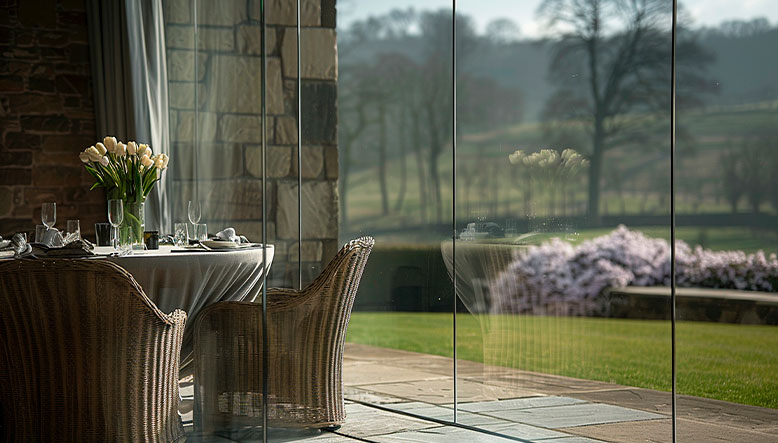
One of the most modern options. They consist of frameless glass panels, which slide on rails. They provide an unobstructed view and elegant aesthetics.
Awning enclosures
They are the most economical alternative. They protect from the sun and offer some privacy. They can be combined with pergolas or fixed structures.
Types of enclosures according to material
The choice of material is one of the most decisive aspects when designing a terrace enclosure. Each one has its own technical, aesthetic and functional characteristics, which affect not only the visual result, but also the comfort, durability and cost of the project. Below, we analyze the materials most commonly used in terrace enclosures:
Glass terrace enclosures
Advantages:
- Natural luminosity: Glass allows the passage of light in its entirety, which makes it the ideal material for dark terraces or terraces that seek to make the most of daylight.
- Aesthetic elegance: It provides a modern and minimalist touch, especially in its version without profiles (glass curtains).
- Unobstructed view: It is perfect for terraces with views, as it allows you to enjoy the environment without visual barriers.
- Adaptability: It can be installed in fixed, sliding or folding enclosures, and can be combined with other materials such as aluminum.

Disadvantages:
- Less insulation than other materials: Unless double or triple glazing with a chamber is used, its thermal or acoustic insulation capacity is limited.
- Requires regular cleaning: Glass surfaces get dirty easily and require frequent maintenance.
Ideal for: Those looking for aesthetics, panoramic views and a modern and diaphanous design.
Aluminum terrace enclosures
Advantages:
- High durability: It does not rust, does not deform and resists weathering.
- Very low maintenance: Periodic cleaning is sufficient to maintain its appearance and functionality.
- Good value for money: It is more economical than glass or wood, and very durable.
- Aesthetic versatility: Available in multiple finishes and colors; can imitate wood, stone or metallic tones.
Disadvantages:
- High thermal conductivity: It transmits cold and heat easily, unless it has a thermal bridge break (RPT).
- More industrial aesthetics: Although it has evolved, it does not provide the warmth of other materials such as wood.
Ideal for: Functional enclosures with firm structure and contained cost, especially in coastal or frequently rainy areas.
PVC terrace enclosures
Advantages:
- High thermal and acoustic insulation: One of the most energy efficient materials. Insulates from noise and extreme temperatures.
- Durability and resistance: Does not rust or deform over time. Withstands moisture and UV rays well.
- Low maintenance: It does not require special treatments and is easy to clean.
- Wide range of finishes: It can be presented in white, solid colors or imitation wood.
Disadvantages:
- Less sophisticated aesthetics: Although there are more decorative versions, visually it may not be as elegant as glass or wood.
- Stiffness: Although strong, it may be less flexible than other materials in some applications.
Ideal for: Areas with extreme climates, homes seeking energy efficiency and users who prioritize insulation and functionality.
Wooden terrace enclosures
Advantages:
- Cozy aesthetics: No other material provides the same feeling of warmth and visual comfort as wood.
- Natural insulator: It has good thermal and acoustic properties.
- Decorative versatility: It adapts well to rustic, vintage or Mediterranean styles.

Disadvantages:
- High maintenance: Requires varnishes, treatments against humidity and regular care.
- Higher price: In general, wood has a higher cost, especially in the case of hardwoods.
- Climate sensitivity: May be affected by prolonged exposure to sun, rain or humidity.
Ideal for: Terraces in rural houses or villas, projects of high decorative value or environments that seek a traditional and natural aesthetic.
Polycarbonate and methacrylate terrace enclosures
Advantages:
- Structural lightness: Much lighter than glass, which facilitates its installation on roofs or large surfaces.
- High impact resistance: Polycarbonate is virtually unbreakable, ideal for areas with hail or strong wind.
- Economical: Its cost is lower compared to other heavier materials.
- Variety of finishes: From totally transparent to translucent or colored.
Disadvantages:
- Less aesthetic: Although practical, its appearance may be less refined.
- Aging of the material: With the passage of time, it may yellow or scratch if not properly cared for.
Ideal for: Pergola covers, movable roofs or economical enclosures on modern terraces.
Comparative summary of materials for terrace enclosures
| Material | Isolation | Aesthetics | Durability | Maintenance | Price |
|---|---|---|---|---|---|
| Crystal | Medium | Very high | High | Medium | Medium-high |
| Aluminum | Low-medium | Medium | Very high | Very low | Medium |
| PVC | Very high | Medium | Very high | Low | Medium |
| Wood | High | Very high | Medium | High | High |
| Polycarbonate | Medium | Medium | High | Low | Low |
There is no single ideal type, as it depends on climate, budget, desired design and end use of the space. However, glass curtains are perfect for aesthetics and light, while PVC is the best choice for insulation and energy efficiency. For non-construction projects, retractable awnings are an effective and economical alternative.
Always bet on quality materials and, if you need it, in ParatuReforma, you will find the best options in construction materials for your project.
What is the most economical terrace enclosure?
Aluminum awnings or structures with fabric are the most affordable option.
Can I close my terrace without doing any construction work?
Yes, with modular enclosures, awnings or glass curtains that do not require major interventions.
What is the best enclosure for cold climates?
PVC and glazing with an air chamber offer better thermal insulation.