The cleaning of a swimming pool is very important, not only in the months of use, but throughout the year. The water is an ideal medium for the growth of many bacteria, fungi and microorganisms. If not carried out correctly, the season of use can become very dangerous for those who bathe. If you do not know how to maintain a swimming pool, whether it is a normal pool or a pool typeyou have come to the right place.
Tips for maintaining a swimming pool
During the season of use of a swimming pool, a lot of attention is paid to ensure that it is in perfect condition so that anyone can use it without danger. But this good condition will be the result of a good maintenance the rest of the year.
Learn how to maintain a swimming pool: you will see that it is not necessary a great effort, but having a swimming pool implies that in winter it is also in the necessary conditions so that it does not grow any type of algae, fungus or bacteria that can be harmful in the future.
Winterizing
When the bathing season arrives, you should take into account whether you have winterized or not to get the pool ready. If you have winterized, it means that during the year you have been taking care of the pool:
- Clean the water from the surface.
- Apply anti-algae on a regular basis to prevent algae growth.
- pH regulation with pH increaser or pH reducer
- To check the cleaning circuit. The filter should be checked weekly and may need to be cleaned weekly depending on the amount of leaves that may fall into the pool.
- Use the filter daily for the number of hours necessary for the pump to be able to filter all the water in the pool at least once a day.
If you have not done so, shortly before the bathing season you should:
- Never empty the pool, since it has been taken care of during the winter through the maintenance and use of greenhouses. The emptying and filling of the pool is a very high cost and unnecessary waste of water as it is a scarce commodity.
- Clean the walls, bottom and filter system.
- pH regulation.
- Increase the chlorine dosage as the use of the pool will cause the chlorine to disappear more quickly.
- Increase the filtering hours of the sewage treatment plant.
Pool location
Depending on where the pool is located, a higher or lower level of maintenance will be required.
- If the pool is located near trees, grass or sand, maintenance will be higher.
- If it is surrounded by concrete or wood, or protected throughout the year, either with a pergola or canopy, it will require less maintenance.

Clean and disinfected swimming pools all year round, step by step
We will explain everything you need to properly maintain a swimming pool:
Parts of a swimming pool
Knowing the parts of a swimming pool is essential to know how it works and what to do in each case. The pool is the place where everyone bathes. But there is usually a system behind it that keeps the water clean and free of impurities:
- A pump sucks the water from the pool through the sumps or skimmers . skimmers.
- The water passes through the filter, where impurities such as leaves are removed.
- The water exits through the impellers to return to the vessel and complete the circuit.
Clean the walls and bottom of the vessel
If you have not winterized the pool, it will be necessary to clean the entire pool shell, both the walls and the bottom.
- Apply a descaling cleaner, let it act and then wash with water.
- Beware of using pressurized water, as it can damage your pool if it is lined with gresite.
Washing the depth filtration system and skimmers
This step is very important: the filtering system is in charge of purifying all the water and making it fit for bathing, so it is advisable to have this system clean and checked.
- Remove the skimmer baskets and check that no debris remains in them or in the pipe inlet.
- Wash and rinse the filter, applying the necessary time in each procedure, observing that the water comes out clear (each pump has an optical checking system).
Filling the pool
- Make sure the bottom valve is closed before proceeding with filling.
- If chlorine is to be used, it is good to start using it halfway through filling.
Regulating the pH value of the pool water
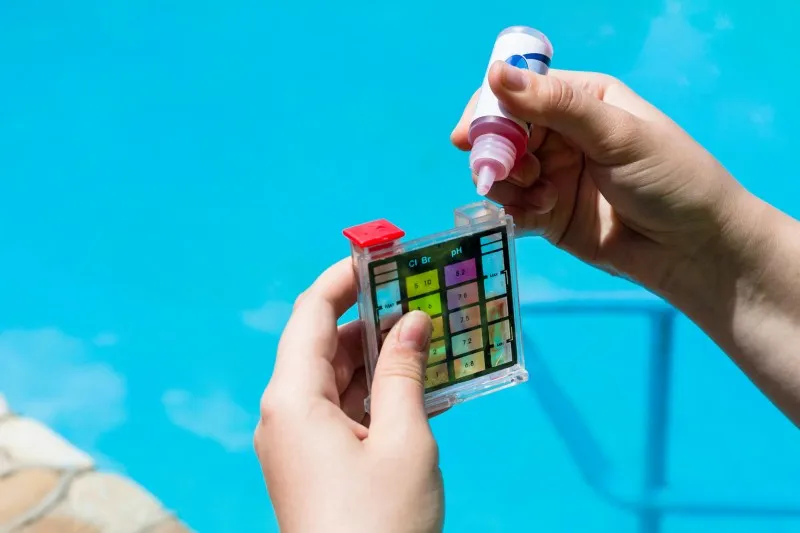
Use a pH and chlorine meter to find out what levels the pool water is at. The pH of the water should be between 7.2 and 7.6:
- If it is below the indicated value, a pH booster should be used.
- Otherwise, a pH reducer should be applied.
Apply water treatment, either chlorine or salt.
Chlorine should be between 1 and 1.5 milligrams per liter. This disinfectant is used to kill microorganisms in the pool.
- The amount to be used will depend on the capacity of the pool.
- Nowadays, salt is increasingly used to treat swimming pool water.
Maintenance of clear and algae-free water
Flocculant and algaecide are the additives needed to eliminate algae. If you notice that the water is turning greenish, you need to act as quickly as possible to remove the algae as easily as possible. Dissolve them in water and pour them around the perimeter of the pool.
As you have seen, knowing how to maintain a swimming pool is key to enjoy it during the summer without any health risk. Do you have any doubts? Ask us!
How often should a swimming pool be cleaned?
During the season of use, the pool should be cleaned daily on the surface, weekly the filter and check the pH every 2–3 days. In winter, it is sufficient to maintain active winterisation: anti-algae, controlled filtration and periodic pH control.
What should the pH level of swimming pool water be?
The ideal pH is between 7.2 and 7.6.
-If it is lower, add pH increaser.
-If it is higher, apply pH reducer.
Maintaining this range is key to ensuring that the chlorine works properly and to prevent irritation to the eyes and skin.
What is winter storage and why is it important?
Winterising is the maintenance of the pool during the winter to prevent algae, bacteria and water deterioration. It includes periodically adding anti-algae treatment, checking the pH, running the filter and checking the filter. If done correctly, it will not be necessary to empty the pool at the start of the season.
How can you prevent algae from growing in your swimming pool?
To prevent algae, it is necessary to:
-Maintain a balanced pH level.
-Apply algaecides regularly.
-Add flocculant if the water loses transparency.
-Ensure the necessary filtration hours and wash the filter frequently.
Is it necessary to empty the pool every year?
No. It is never recommended to empty the pool, except for structural repairs. The water should be maintained throughout the year by winterising, which avoids enormous expense, environmental impact and possible damage to the structure of the pool due to ground pressure.