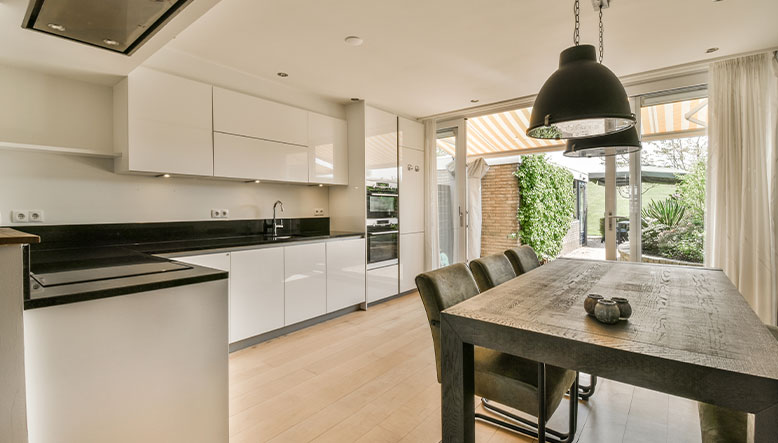
The L-shaped kitchen layout is one of the most popular and functional for kitchens of all sizes.
By arranging furniture and appliances along two perpendicular walls, space is optimized and a smooth workflow is facilitated.
To get the most out of an L-shaped kitchen, it is important to consider the work triangle, use vertical storage, incorporate an island or bar, choose appropriate colors and materials, and plan for adequate lighting.

Optimize the work triangle in your L-shaped kitchen
When it comes to maximizing the efficiency of an L-shaped kitchen, one of the most crucial elements to consider is the optimal layout of the work triangle.
The work triangle, a fundamental concept in kitchen design, connects the three main work areas in the kitchen: the sink, the stove, and the refrigerator.
This triangular layout is essential for streamlining workflow in the kitchen, and paying special attention to its layout can have a significant impact on the functionality of the space.
Laying out an L-shaped kitchen requires careful consideration of the work triangle. Placing the cooking area, which usually includes the stove and oven, in one corner of the L, and placing the sink and refrigerator along the adjacent sides, creates a natural flow for food preparation and cooking.
This strategic location not only facilitates a smooth workflow, but also minimizes the amount of back-and-forth movement, ultimately improving the efficiency of your kitchen.
By following the principles of the work triangle, you can make the most of the available space and create an ergonomic, uninterrupted cooking environment.
Make the most of vertical storage in your L-shaped kitchen
When seeking to optimize an L-shaped kitchen, especially one with limited space, the importance of vertical storage cannot be underestimated.
Utilizing the vertical space in the kitchen, including walls and vertical gaps, is a key strategy for maximizing storage and maintaining a clutter-free environment.
Installing tall cabinets that reach the ceiling or incorporating shelves to store kitchen items vertically frees up valuable floor space and creates the illusion of a more spacious area.
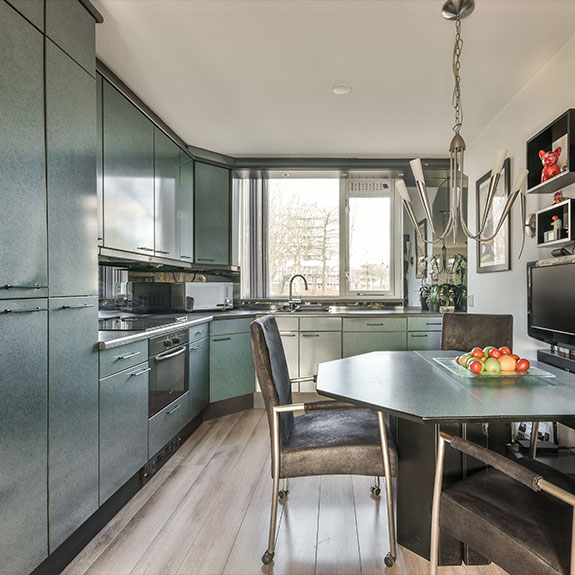
In addition, integrating vertical storage solutions, such as hanging shelves, magnetic knife strips, and tiered organizers, not only maximizes the available storage in your L-shaped kitchen, but also contributes to an organized and efficient workspace.
By taking advantage of the vertical potential of your kitchen, you can clear your countertops and other work surfaces, ultimately promoting a more rational and aesthetically pleasing kitchen environment.
Incorporate a functional breakfast bar or island
When it comes to improving the functionality and aesthetic appeal of your L-shaped kitchen, adding a central island or breakfast bar can be a game-changing design element.
An island or breakfast bar not only serves as a versatile workspace for meal preparation and cooking, but also offers the possibility of an informal dining area or a convenient place for quick meals. In addition, a well-placed island can serve as a focal point in the kitchen, adding a touch of modernity and elegance to the overall design.
In the case of a smaller L-shaped kitchen, a bar with comfortable, space-efficient seating can make a significant difference to the usability of the space, allowing it to serve as a multifunctional area for cooking, eating, and even socializing.
When incorporating an island or breakfast bar, it is crucial to ensure that there is ample space on all sides to maintain smooth traffic flow and clearly define the purpose of the space. By incorporating a carefully designed island or breakfast bar, you can elevate the functionality, style, and overall aesthetics of your L-shaped kitchen.
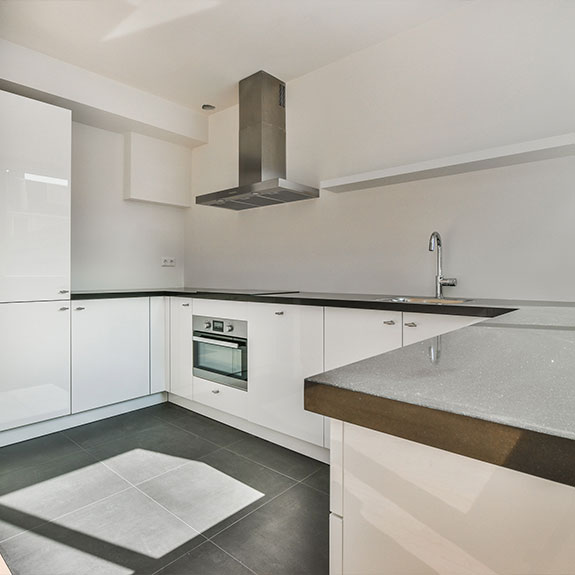
The selection of colors and materials for an L-shaped kitchen plays a key role in shaping the visual appeal and sense of spaciousness of the space. Opting for light, neutral color palettes can imbue the kitchen with an air of spaciousness and brightness, making it feel more open and welcoming.
In addition, the use of reflective materials, such as stainless steel accents, glass inserts, and glossy finishes, can further amplify the feeling of light and space in the kitchen.
Also, the integration of durable and easy-to-maintain materials, such as quartz or granite countertops and ceramic or porcelain floor tiles, contributes to the longevity and functionality of the kitchen, while enhancing its overall aesthetics.
When choosing colors and materials, it is essential to consider cohesion with the rest of the living space, especially in the case of an L-shaped kitchen that is integrated with adjacent areas, to create a sense of visual continuity and harmony throughout the home.
On the other hand, the strategic use of lighting elements, such as pendant lights above the island or breakfast bar and task lighting for work areas, can accentuate the colors and materials you have chosen while creating a cozy and functional atmosphere in your L-shaped kitchen.
By carefully selecting and harmonizing the colors and materials in your kitchen design, you can create a space that expresses both style and practicality.
Planning the right lighting for your L-shaped kitchen
The role of well-planned lighting in an L-shaped kitchen cannot be overestimated, as it is essential for creating a warm and welcoming atmosphere and improving the functionality of the space. A judicious combination of ambient, task, and accent lighting can ensure that the kitchen is well lit at all times and that the different areas of the kitchen perform their functions optimally.
Whether it’s bright task lighting over prep areas, subtle accent lighting to highlight architectural features, or ambient lighting to create a relaxing atmosphere, a well-thought-out lighting plan can enhance the overall appeal and usability of your kitchen.
Furthermore, in the context of an L-shaped kitchen, where the layout can create distinct areas, it is essential to address each area with the appropriate lighting solutions. For example, effectively lighting corner areas and recesses can dispel any feeling of confinement and create a more open and welcoming atmosphere.
In addition, integrating lighting under cabinets not only serves as a practical solution for illuminating the countertop and work areas, but also adds a layer of visual interest to the kitchen, enriching its overall design.
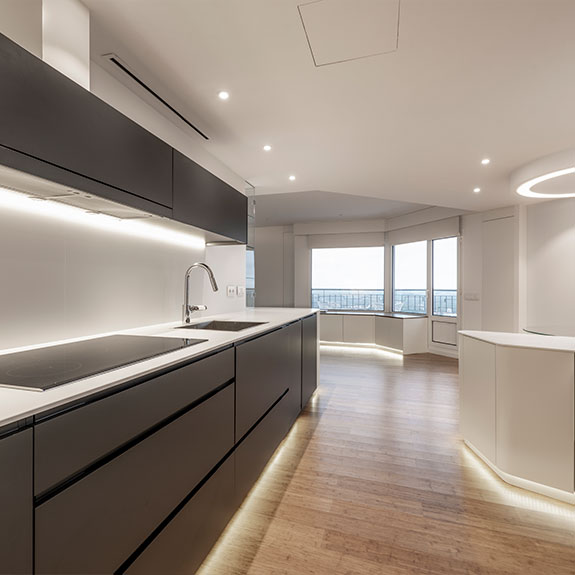
Ensure ample space around the cooking area.
When designing an L-shaped kitchen, it is essential to prioritize allocating sufficient clear space around the cooking area to ensure both safety and ease of movement.
Whether installing the stove, oven, or other kitchen appliances, leaving a well-defined separation zone, typically around 40 to 48 inches, is crucial for comfortable and safe cooking activities.
This free space around the cooking area not only promotes a smooth, unobstructed workflow, but also acts as a safety measure and practical necessity to mitigate the risk of accidents and ensure a stress-free cooking experience.
In the case of an L-shaped kitchen, where the work areas may be configured in a corner or along a single wall, it is particularly important to leave sufficient space around the kitchen appliances.
Whether it’s including a clear space for placing hot pans and utensils or ensuring a safe distance for kitchen traffic flow, a well-laid-out kitchen plan with ample space around the cooking area is essential for cultivating a harmonious and practical culinary environment.
Placing the refrigerator on the short arm of the L
One of the key considerations in the layout of an L-shaped kitchen is the strategic placement of the refrigerator, the central element of the kitchen triangle.
Placing the refrigerator on the short arm of the L, ideally close to the prep area and adjacent access points, is a practical and functional approach to optimizing kitchen efficiency. This placement not only facilitates a smooth flow between the refrigerator, sink, and cooking area, but also minimizes unnecessary movement and streamlines the cooking process.
By placing the refrigerator on the shorter arm of the L, it becomes an integral part of the work triangle, contributing to more efficient and fluid kitchen operation.
This strategic positioning not only enhances the functional aspect of the kitchen, but also promotes a sense of balance and visual continuity in the overall design, creating a cohesive and harmonious culinary space.
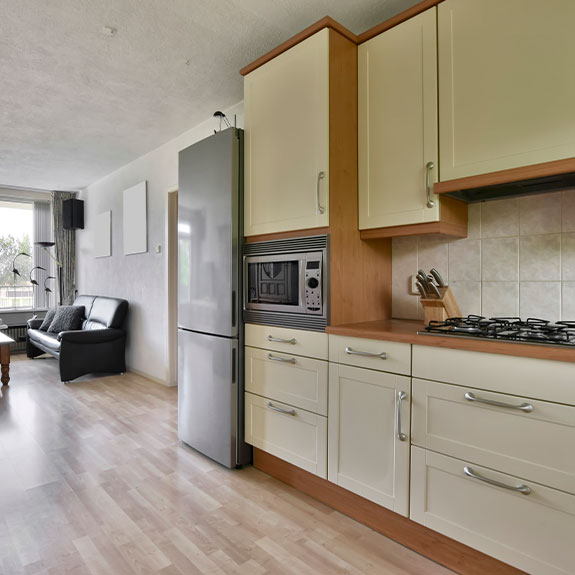
Maximize vertical space with tall cabinets
When it comes to designing an L-shaped kitchen, making the most of vertical space is a practical and essential strategy, especially in small or compact kitchens. Integrating tall cabinets that reach up to the ceiling is a very effective solution for maximizing vertical storage potential, reducing clutter, and creating a clean and organized feel.
These tall cabinets not only offer ample storage space for kitchen essentials, utensils, and pantry items, but they also play an important role in elevating the overall visual aesthetic of the kitchen, creating a contemporary and seamless look.
In addition, the inclusion of vertically oriented storage elements, such as pull-out pantries and multipurpose shelving, not only expands the kitchen’s storage capacity, but also makes it easier to access and organize stored items.
By incorporating these vertical storage solutions, you can optimize space utilization and transform your L-shaped kitchen into a highly functional and visually appealing culinary haven.
Installation of organizers and drawer modules to improve efficiency
Integrating organizers and drawer modules into your L-shaped kitchen is a smart and strategic approach to improving the efficiency and functionality of the space.
These specialized storage solutions are designed to compartmentalize and organize various kitchen items, from utensils and cutlery to pots, pans, and small appliances, promoting a clutter-free and streamlined environment.
The addition of drawer dividers, pull-out trays, and removable trash bins not only optimizes available storage space, but also ensures easy access and a tidy kitchen.
In addition, incorporating drawer modules, such as deep drawers for storing large utensils and accessories, as well as specialized storage solutions for small utensils and items, can significantly enhance the usability and convenience of your L-shaped kitchen.
By implementing these practical and customized storage solutions, you can create a highly organized and efficient culinary workspace that meets your specific needs and transforms your kitchen into a fluid and stylish environment for cooking and entertaining.
Summary of the key approach to laying out your L-shaped kitchen
When it comes to laying out an L-shaped kitchen, strategic coordination of elements such as the work triangle, vertical storage, color schemes, and functional accessories is essential to transforming the space into a harmonious, efficient, and visually appealing culinary domain.
By optimizing the layout, incorporating practical and functional features, and paying attention to design and lighting nuances, you can create an L-shaped kitchen that not only embodies your design aspirations but also serves as a highly functional and versatile space for cooking, eating, and socializing.
By taking a thoughtful and comprehensive approach to the layout of your L-shaped kitchen, you can unlock its full potential and create a culinary environment that is as stylish as it is practical.
Conclusion
In conclusion, properly laying out an L-shaped kitchen can significantly improve the functionality and efficiency of the space, especially in small kitchens.
By considering the placement of key elements, utilizing vertical storage, and incorporating practical features such as islands or bars, a kitchen can be optimized for optimal workflow.
In addition, choosing the right colors and materials and planning appropriate lighting can further enhance the overall design and use of space. Overall, carefully planning and organizing an L-shaped kitchen can help you make the most of the space and create a functional and visually appealing cooking area.
How should an L-shaped kitchen be laid out?
The best way to lay out an L-shaped kitchen is to follow the work triangle: place the sink, stove, and refrigerator in strategic positions that facilitate workflow.
What are the advantages of an L-shaped kitchen?
L-shaped kitchens make better use of space, allow greater freedom of movement, and facilitate the addition of an island or breakfast bar to increase functionality.
How can you make the most of the space in a small L-shaped kitchen?
In small L-shaped kitchens, it is advisable to use vertical storage with tall cabinets that reach the ceiling, open shelves, and organizers to keep everything tidy without wasting space.
Where should you put the refrigerator in an L-shaped kitchen?
The most practical solution is to place the refrigerator on the short arm of the L, close to the food preparation area and the sink, so that it is integrated into the work triangle.
What lighting is recommended for an L-shaped kitchen?
It is advisable to combine general lighting, task lighting under cabinets, and pendant lights above the island or bar, which provides functionality and a more welcoming atmosphere.