

Is your house cold in winter and too hot in summer? This may be due to a lack of thermal insulation. Good insulation not only reduces energy consumption, but also improves comfort and prevents moisture problems.
To insulate a house against the cold, start with the areas where the most heat escapes: the roof, walls, and windows, and choose an insulation material with low thermal conductivity, such as mineral wool, polystyrene, or polyurethane. Good insulation reduces your heating and cooling costs and improves the comfort and humidity levels in your home.
In this guide, we explain what thermal insulation is, what materials are available and how much they cost, how to insulate each area of the house, and what mistakes to avoid.
In this article we explain what thermal insulation is, its benefits and how to apply it in your home with effective solutions and suitable materials.

What is thermal insulation?
Thermal insulation is the set of materials and techniques used to reduce heat transfer between the inside and outside of a home. Its main objective is to maintain a stable temperature in the home, preventing cold or heat from penetrating through ceilings, walls, windows or floors.
How does thermal insulation work?
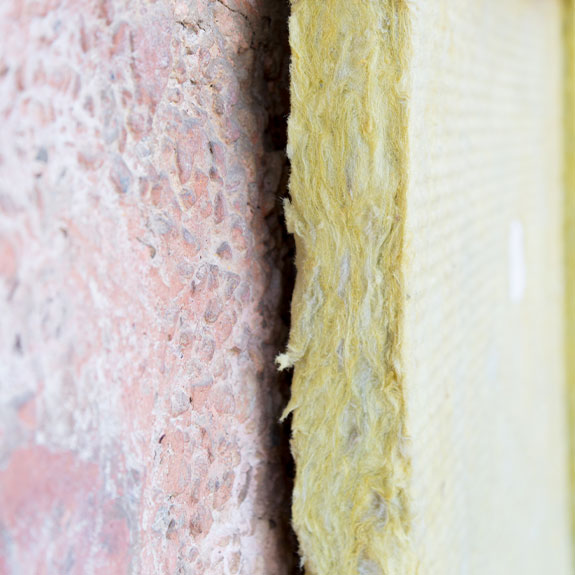
Thermal insulation materials act as a barrier against heat loss in winter and heat gain in summer. They work by trapping air in their structure or by reflecting thermal radiation, thus minimizing temperature exchange.
The quality of an insulator is measured by two values:
- Thermal conductivity (λ): how much heat the material allows to pass through. The lower the value, the better the insulation.
- Thermal resistance (R): how much a specific layer resists heat. It depends on the thickness (e): the thicker the layer, the greater the resistance.
For example, 5 cm (0.05 m) of insulation with λ = 0.035 W/m·K results in a thermal resistance of 0.05 / 0.035 ≈ 1.43 m²·K/W. This value is useful for comparing materials and thicknesses: both pieces of information are provided in the product’s technical specifications.
Good insulation doesn’t just save energy. It also prevents cold walls, which are prone to moisture condensation and mold growth. If you’re already dealing with this problem, check out our guide to moisture in the home.
Types of Insulation Materials: A Comparison
These are the most commonly used thermal insulation materials in a home. The lower the thermal conductivity (λ), the better the insulation for the same thickness.
| Material | Thermal conductivity λ (W/m·K) | Approximate price of the material (€/m², 5 cm) | Where it is used |
|---|---|---|---|
| Mineral wool (rock or glass) | 0,032–0,040 | 4–10 | Walls, ceilings, and air chambers |
| Expanded polystyrene (EPS) | 0,032–0,038 | 3–8 | Facades (SATE), Floors, and Roofs |
| Extruded polystyrene (XPS) | 0,029–0,036 | 6–14 | Flat roofs, floors, and areas with moisture |
| Spray-applied polyurethane | 0,022–0,028 | 12–20 | Roofs, attics, and hard-to-reach spaces |
| Cork | 0,037–0,045 | 15–30 | Walls and Floors: The Natural Choice |
| Wood fiber | 0,038–0,045 | 15–30 | Walls, Ceilings, and Roofs: An Eco-Friendly Option |
What is the best thermal insulation? Polyurethane provides the best insulation for a given thickness, followed by XPS. The most economical options to start with are EPS or mineral wool, and the most eco-friendly are cork and wood fiber. The answer depends on the region and your budget, as you’ll see below.
Beyond the material itself, other factors come into play:
- Moisture: In damp soils and areas, use materials that do not absorb water, such as XPS.
- Available space: If you have limited depth, choose an insulator with low thermal conductivity.
- Acoustics: Mineral wool also helps reduce noise.
- Fire: Mineral wool does not burn; polystyrene and polyurethane require protection.
How to Insulate Your Home Based on Your Location
You don’t have to insulate everything at once. Start with the areas where the most heat escapes: usually the ceiling or roof and the exterior walls, followed by the windows and floor.
Walls: SATE, cladding, or injection
- SATE (aislamiento por el exterior): se coloca el aislante (EPS o lana mineral) por fuera de la fachada y se reviste. Es la opción más completa porque elimina los puentes térmicos y no te quita espacio dentro. Eso sí, es la más cara y suele requerir permiso de la comunidad si vives en un bloque.
- Interior cladding: laminated gypsum boards with insulation behind them, either glued in place or mounted on a framing system. It’s cheaper and doesn’t affect the exterior wall, but you lose between 5 and 10 cm of room space, and it doesn’t address thermal bridges.
- Insulation injection into the air cavity: If your wall has an air cavity (very common in homes built since the 1970s), insulation is injected through small holes. It’s quick, inexpensive, and doesn’t require major construction work.
If you notice stains or mold on the walls, check the source of the moisture before insulating: insulating over a damp wall will make the problem worse.
Ceiling and Roof
A significant amount of heat escapes through the roof, especially in attics and top-floor apartments. If you have an accessible attic, the simplest solution is to lay mineral wool blankets or panels on the attic floor. On sloped roofs, insulation is installed beneath the shingles or sprayed polyurethane foam is applied. If you have a flat roof, XPS panels installed under the waterproofing work very well.
Soil
Insulating the floor is important if you have a garage, commercial space, or basement below it. You can use rigid panels under the flooring or insulate the ceiling of the space below. Here’s a step-by-step guide on how to insulate the floor in an older home.
Windows and doors
Windows are the weak point in almost any home. You have three levels of action:
- Seal any gaps with weatherstripping and silicone. It’s the cheapest option, and you’ll notice the difference right away.
- Replace the glass with double-pane (or Climalit) glass featuring an air or gas-filled cavity.
- Replace the entire window with a PVC or aluminum window featuring a thermal break.
In addition, lowering the blinds and closing heavy curtains at night reduces heat loss. If the problem is wind, find out how to protect your windows from strong winds.
Insulate Without Construction Work
If you rent or don’t want to renovate, there are simple solutions: weatherstripping, thermal curtains, rugs, window insulation film, and thermal insulation paint as a supplement. These are explained in the section on insulating your home without major renovations.
How much does it cost to insulate a house?
The price depends on the location, the material, and whether scaffolding needs to be erected or finishes need to be removed. Here are some approximate price ranges in Spain, with labor included:
| Performance | Estimated price | Savings / Improvements |
|---|---|---|
| SATE (exterior facade) | 50–120 €/m² | Tall, without thermal bridges |
| Interior cladding | 30–60 €/m² | Center, you lose space |
| Injection into the air chamber | 8–20 €/m² | Stop if there’s a camera |
| Roof | 20–50 €/m² | High, especially on the top floor |
| Floor above an unheated space | 15–40 €/m² | Medium |
| Double-glazed PVC window | 300–700 € per unit | Height in front of a single window |
Prices vary widely depending on the home, so always get several quotes. In addition, many communities offer grants and tax credits for improving energy efficiency: check what’s available in your area before you start.
Common Mistakes When Insulating
Start with what makes the least difference: replacing the floor without touching the ceiling or windows is rarely worth the effort.
Leaving thermal bridges: If you insulate only part of the structure, heat will escape through columns, floor slabs, or window frames, and you may experience condensation.
Insulating from the inside without addressing moisture issues: a poorly installed wall lining can cause condensation and mold to form behind the panels.
Don’t ventilate: A well-insulated home needs fresh air. Ventilate for a few minutes every day to prevent moisture buildup.
Benefits of thermal insulation in the home
- Energy savings: Reduces heating and air conditioning consumption by up to 50%.
- Greater thermal comfort: Maintains a stable temperature throughout the year.
- Less humidity and mold: Prevents condensation on walls and ceilings.
- Acoustic insulation: Many thermal materials also absorb external noise.
- Sustainability: Reduces CO₂ emissions, helping the environment.
- Home appreciation: A well-insulated home has a higher value in the real estate market.

Types of thermal insulators according to their material
- Minerals: Rock wool, glass wool.
- Synthetics: Expanded polystyrene (EPS), extruded polystyrene (XPS), polyurethane.
- Vegetables: Cork, cellulose, wood fiber.
- Reflective: Multi-layer aluminum foils.
Types of thermal insulation according to the area of application
- Façades: SATE systems, interior wall cladding, foam injection.
- Roofs and decks: Insulating panels, projected polyurethane.
- Floors: Insulating bases, floating floors.
- Doors and windows: Thermal break windows, weather stripping, thermal blinds.
How to improve thermal insulation at home
Wall and facade insulation
Walls are one of the main routes of heat loss. Some options to improve their insulation are:
- SATE (Exterior Thermal Insulation System): Insulating boards are installed on the facade, coated with mortar.
- Gypsum plasterboard walls: A metal structure with insulation is placed inside the house.
- Foam or cellulose injection: Insulating material is injected into the air chambers of the walls.
Roof and ceiling insulation
- Extruded polystyrene (XPS): Strong and suitable for walkable roofs.
- Mineral wool: Flexible and easy to install in interior ceilings.
- Reflective insulation: Ideal for attics or low ceilings.
Floor insulation
- Insulating underlayment under floorboards or laminate flooring.
- Reflective sheeting on cold soils.
- Injection of insulation in floors with air chambers.
How to improve window and door insulation
- PVC or aluminum windows with thermal break.
- Double or triple glazing with air chamber.
- Weatherstripping on doors and windows to prevent air infiltration.
- Insulation in shutter boxes.
Factors to consider before insulating your home
- Climate of your area: In cold areas, prioritize materials with high thermal resistance.
- Budget: There are inexpensive options such as weather-stripping and more expensive options such as weather-stripping.
- Type of house: Insulating an apartment is not the same as insulating a single-family house.
- Material compatibility: Not all insulators are suitable for all structures.
Thermal insulation is key to an efficient and comfortable home. By applying the right solutions in walls, ceilings, floors and windows, you can reduce costs and improve the quality of life.
At Paratureforma you will find the best materials to improve the insulation of your home, start today and save energy!
Conclusion
Properly insulating your home is the surest way to spend less on heating and stay comfortable all year round. You don’t have to do it all at once: start with the ceiling and windows, move on to the walls, and choose the material based on your budget and where you live. If you want to decide on a heating method later, check out heating systems and electric heating.
What is the best thermal insulation for a house?
It depends on the area to be insulated. For facades, SATE; for roofs, mineral wool; for floors, insulating underlayment.
How much does it cost to insulate a house?
From €1,500 for basic solutions to more than €6,000 for complete systems.
Is thermal insulation environmentally friendly?
Yes, because it reduces energy consumption and there are sustainable options such as cellulose or projected cork.
What is the best thermal insulation?
It depends on the area. In terms of thermal conductivity, polyurethane provides the best insulation, followed by XPS. For a facade, EPS or mineral wool offer the best value for the money.
How much does it cost to insulate a house?
It depends on the type of work: from about 8–20 €/m² for filling the air chamber to 50–120 €/m² for an ETICS system. A double-glazed PVC window costs around 300–700 €.
Is thermal insulation environmentally friendly?
Yes, because it reduces heating and air conditioning use for years. If you want a more sustainable option, cork and wood fiber are natural materials.
Where do I start when insulating my house?
Where does the most heat escape: the ceiling or roof and the windows? Next, the exterior walls, and finally, the floor.
Is it possible to insulate a house without doing any construction work?
Yes, to some extent. Weatherstripping, thermal curtains, window films, and thermal paint help, although they are no substitute for proper insulation of walls or ceilings.
Is it better to insulate from the inside or the outside?
Exterior insulation (SATE) provides better insulation because it eliminates thermal bridges and doesn’t take up any space. Interior insulation is cheaper and doesn’t require a facade permit, but you lose space and have to be careful about moisture.