
The cold season is here, and with it comes that time when turning up the thermostat just doesn’t seem to be enough to warm up the rooms. You feel treacherous drafts when you walk near the windows, your feet get freezing cold on the floor, and to top it all off, your energy bill just keeps going up. If you’re wondering how to insulate your home from the cold without breaking the bank, we have good news: most heat loss in a home can be fixed quickly, easily, and very affordably.
At Paratureforma, we know full well that thermal maintenance doesn’t have to mean endless construction projects. Often, the difference between a cold house in winter and a comfortable home lies in sealing small thermal bridges and using the right materials. That’s why we’ve put together this practical guide with 10 solutions, listed from lowest to highest cost, so you can stop energy loss today, restore comfort to every room, and drastically reduce your heating bill.
The Source of the Problem: Where Is the Heat Escaping From Your Home?
Before you rush to implement solutions, it’s essential to understand how the physics of heat work inside your home. Heat always seeks out the coldest area to balance the temperature. If your home’s envelope (windows, doors, walls, and ceilings) has cracks or lacks adequate thermal insulation, the warm air generated by your radiators or heat pump will escape outside, forcing your heating systems to work twice as hard.
The most common fire escape routes in a standard home are:
- Windows and balconies (30–35%): Through the glass, uninsulated metal frames, and gaps in the roller shutter drums.
- Exterior walls (25–30%): Due to the lack of an insulating layer in the facade’s air cavity.
- Doors and entrances (10–15%): Due to gaps at the bottom and around the perimeter that connect to unheated areas (landings, garages, or the outdoors).
- Floors and ceilings (15–20%): Especially on ground floors above cold slabs or on top floors under the roof.
10 Effective Ways to Keep Your Home Warm
Below, we review the 10 best strategies for preventing heat loss, listed from immediate, low-cost measures to more extensive thermal retrofits.
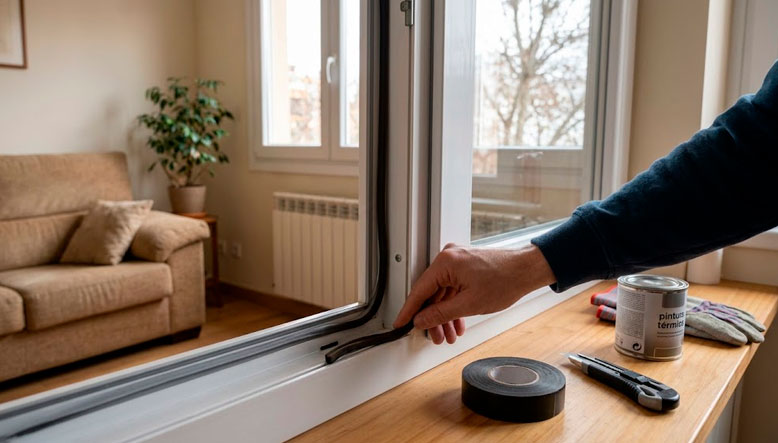
1. Install weatherstripping on windows and doors
It’s the most cost-effective emergency measure with immediate results. The freezing air from outside often seeps in through the small gaps between the window pane and the frame.
- Approximate cost: From €5 to €15.
- Difficulty: Very low (DIY in 15 minutes).
- Estimated savings: Up to 10% on heating.
Weatherstripping for windows and doors is made from materials such as flexible silicone, EPDM rubber, or polyurethane foam. Simply clean the area thoroughly with alcohol, remove the protective film from the adhesive, and apply the strip by pressing it firmly along the entire perimeter of the window or door. You’ll notice right away that the wind stops whistling.
2. Seal the roller shutter drum with insulation panels
The roller-shutter box is, by far, one of the biggest sources of cold drafts and street noise. Because it is hollow and opens directly to the outside, it acts as a “freezing tunnel” leading into the bedroom or living room.
- Approximate cost: €15 to €30 per box.
- Difficulty: Low (requires unscrewing the manhole cover).
- Estimated savings: Between 5% and 8%.
Open the access panel of the roller shade and place handrails or flexible sheets of expanded polystyrene or rock wool inside, shaped to fit the curved space of the roller tube. You can also install airtight strap guides to prevent air from seeping through the slot where the strap exits.
3. Install weatherstripping under doors and thermal downspouts
Entrance doors, or those that open onto cold hallways, patios, or garages, usually have a gap at the bottom of nearly one centimeter, through which a constant stream of cold air enters at floor level.
- Approximate cost: €8 to €20 per door.
- Difficulty: Very low.
- Estimated savings: About 5%.
You can choose between automatic aluminum swing shutters with a brush, double-roll foam seals that slide under the door, or clear silicone adhesive strips. They’ll maintain the room temperature in your living room without letting the cold from the hallway seep in.
4. Use thermal curtains and transparent window films
If your windows are single-pane or you don’t have the budget right now to replace them, you can install additional physical barriers to block cold air from entering.
- Approximate cost: €20 to €50 per window.
- Difficulty: Low.
- Estimated savings: Between 5% and 7%.
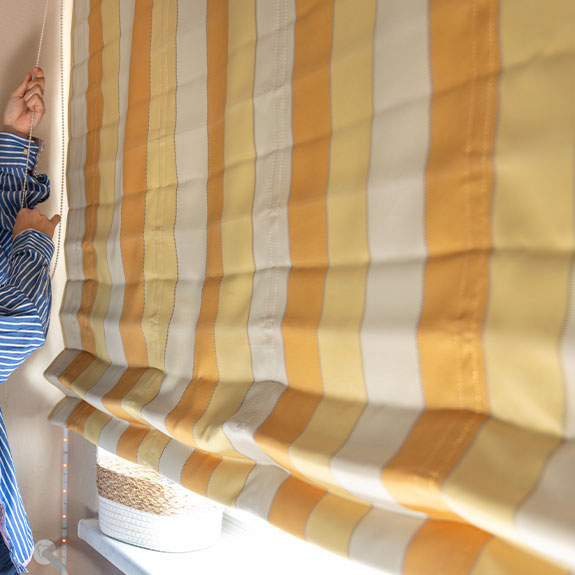
Thermal curtains feature a dense insulating lining that reduces the sensation of a cold wall. In addition, there are transparent heat-shrinkable plastic films or sheets that are attached to the frame with double-sided tape and stretched taut using a hair dryer, creating an insulating air chamber directly on the glass itself.
5. Install heat reflectors behind the radiators
When a radiator heats up, it emits hot air through convection but also infrared radiation toward the wall on which it is mounted. If that wall faces the outside, much of the heat is absorbed by the wall and lost to the street.
- Approximate cost: €10 to €25 per radiator.
- Difficulty: Very low.
- Estimated savings: Between 6% and 10% of the radiator’s energy consumption.
Reflective panels combine a layer of insulating foam with a sheet of polished aluminum. They are cut to fit the radiator and installed from behind, securing them to the wall. The aluminum reflects radiant heat back toward the center of the room instead of letting it seep through the brick.
6. Apply thermal paint to cold interior walls
If an exterior wall inside your home feels cold to the touch, moisture in the air will eventually condense on it. Thermal paint is an ideal technical solution for insulating walls against the cold without losing usable living space.
- Approximate cost: From €40 to €90 (depending on square meters).
- Difficulty: Medium (conventional painting with a roller).
- Estimated savings: Up to 8–12%.
These paints contain hollow ceramic microspheres in their formulation that disrupt the conductivity of the substrate. When applied in 2 or 3 coats to north-facing walls or cold facades, the wall’s surface temperature increases by between 2 °C and 4 °C to the touch, helping to retain heat in the home and preventing condensation.
7. Insulate cold floors with heating mats or underlayment
Walking on a frozen floor creates a very uncomfortable sensation. Ceramic or stone materials quickly conduct the cold from the floor slab below.
- Approximate cost: From €30 to €150 (depending on the length of stay).
- Difficulty: Low.
- Estimated savings: About 5%.
In the short term, laying heavy-weight wool or synthetic-fiber rugs in high-traffic areas creates an effective insulating layer. If you’re thinking about renovating your flooring, installing laminate or vinyl flooring over a rubber, cork, or extruded polyethylene underlayment will make a world of difference in how comfortable it feels underfoot.
8. Blow thermal insulation into the air space in the walls
The vast majority of homes built between the 1970s and 2000 have facades consisting of two layers of brick with a hollow air cavity in between. This cavity often causes convective drafts of cold air.
- Approximate cost: From €800 to €1,800 (depending on the length of the facade).
- Difficulty: Professional (no disruptive construction work; completed in 1 day).
- Estimated savings: Between 20% and 30%.
Through small holes drilled into the brick joints or from inside the home, granular insulation material—such as mineral wool, cellulose, or EPS beads with graphite—is injected under pressure. The cavity is completely filled, eliminating internal drafts and providing thermal insulation for the facade.
9. Switch to PVC or aluminum windows with thermal breaks (RPT)
If your windows are single-pane aluminum sliding windows without insulation, they are the main source of energy loss in your home.
- Approximate cost: From €350 to €800 per window.
- Difficulty: Professional (requires technical installation).
- Estimated savings: Between 25% and 35%.
Investing in windows with PVC or aluminum frames featuring thermal breaks (RPT), combined with low-emissivity double-pane glass (such as 4/16/4 systems with argon gas in the cavity), will completely transform your home’s insulation. You’ll eliminate drafts, outside noise, and morning condensation.
10. Line the walls with drywall and rock wool
It is the ultimate solution for thermal insulation of floors and walls when seeking the highest level of efficiency in older homes or single-family homes with very cold stone or exposed brick walls.
- Approximate cost: From €35 to €60 per square meter.
- Difficulty: Medium-High (requires metal profiles and plates).
- Estimated savings: Up to 35–40% in energy consumption.
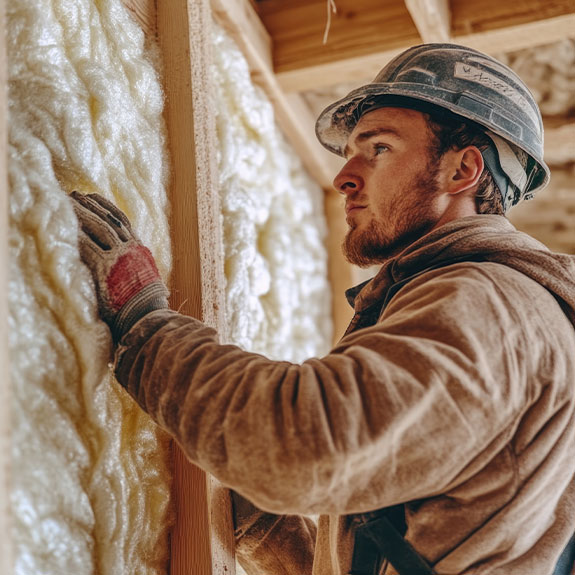
This involves erecting an interior partition wall made of laminated drywall panels mounted on a framework of omega-shaped or galvanized steel channels, with rock wool or high-density extruded polystyrene (XPS) panels inside. The result is a completely smooth wall that is insulated against both extreme cold and street noise.
Comparison Chart of Thermal Insulation Solutions
| Solution | Approx. Cost | Installation Difficulty | Estimated Energy Savings |
| 1. Perimeter weatherstripping | 5 € – 15 € | Very Low (DIY) | Up to 10% |
| 2. Roller Shutter Box Insulation | 15 € – 30 € per unit | Cancel | 5% – 8% |
| 3. Door stops | €8 – €20 | Very Low | ~ 5% |
| 4. Thermal curtains and films | €20–€50 per window | Cancel | 5% – 7% |
| 5. Radiator reflectors | €10–€25 per unit | Very Low | 6% – 10% |
| 6. Anti-condensation thermal paint | €40–€90 per jar | Medium (Painted) | 8% – 12% |
| 7. Rugs and Floor Mats | 30 € – 150 € | Cancel | ~ 5% |
| 8. Inflated with an inner tube | 800 € – 1.800 € | Professional | 20% – 30% |
| 9. PVC/RPT Double-Pane Window | 350 € – 800 € per unit | Professional | 25% – 35% |
| 10. Pladur Cladding + Rock Wool | 35 € – 60 € / m2 | Registration / Renewal | 35% – 40% |
Conclusion
Knowing how to insulate a house from the cold is a matter of method and intelligently addressing the critical areas where heat escapes. Start today by installing weatherstripping on windows and doors, placing reflective sheets behind your radiators, or applying thermal paint to those cold walls that make your rooms less comfortable. You’ll see how these simple steps can help you maintain a warm and cozy atmosphere while keeping your energy costs down this winter.
At the paratureforma online store, we offer a complete catalog of materials for thermal and acoustic insulation: high-strength weatherstripping, elastic sealants, insulation blankets, drywall panels, rock wool, and state-of-the-art thermal paints to get your home in top shape with the highest guarantee of quality.
Is it better to insulate a house from the inside or the outside?
Exterior insulation (for example, using ETICS systems) is technically superior because it eliminates all thermal bridges in the floor slabs. However, in an apartment within a condominium, interior insulation (thermal paint, blown-in insulation, or drywall) is the fastest, most economical, and most viable alternative, as it does not require approval from the condominium association.
How much money can I save each year by properly insulating my apartment?
A poorly insulated home can lose up to 40% of its heating energy. Implementing a combination of solutions—such as sealing cracks, insulating blinds, and using radiator reflectors—allows you to recoup your investment within the first winter season, reducing your annual energy bill by between €200 and more than €600, depending on the type of fuel used.
What temperature should I set the heater to so I don’t spend too much?
The ideal comfortable temperature during the day in winter is between 19 °C and 21 °C. For every degree you raise the thermostat above 21 °C, your heating system’s energy consumption increases by 7% to 10%. At night, it’s enough to keep your home between 15 °C and 17 °C.
Should I ventilate the house in winter even if it’s very cold outside?
Yes, it’s essential. Ventilating the air is crucial for removing moisture accumulated from breathing and water use in the home. Humid air is much harder and more expensive to heat than dry air. Ideally, you should cross-ventilate for 10 to 15 minutes mid-morning by opening the windows wide to let fresh air in without cooling the walls.
Do silicone weatherstrips really work better than foam ones?
Yes, silicone and EPDM rubber weatherstrips offer superior performance compared to traditional foam weatherstrips. They have much greater elastic recovery (they return to their original shape without deforming), better withstand the continuous friction caused by closing the window, and do not degrade when exposed to the sun’s UV rays.