
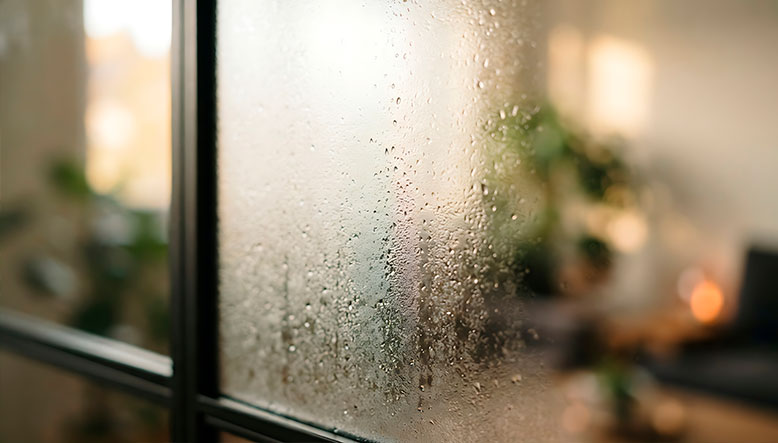
As the cold weather sets in, we turn on the heat, and suddenly, in the mornings, you notice water on the windows, dripping down toward the window sills. A few weeks later, those dreaded dark spots begin to appear in the corners and on the window frames, or even mold on the ceiling and in the corners of the rooms.
Finding moisture on interior walls not only ruins the appearance of your home and gives off an unpleasant odor; it’s a clear sign that the air inside your home isn’t circulating or being regulated properly. What’s more, mold in your home poses a real risk to your family’s respiratory health.
At Paratureforma, we know how frustrating it is to clean a stain only to see it reappear a few days later. That’s why, in this comprehensive guide, we explain in simple terms why condensation-related moisture occurs, how to determine whether this is your problem or if it’s another type of moisture, and what permanent solutions you can implement today—or through minor renovations—to eliminate it for good.

Why does condensation form on the windows and mold grow on the walls during the winter?
The cause of condensation on windows and walls can be explained by a fundamental physical principle: the saturation of moisture in the air when it comes into contact with a cold surface.
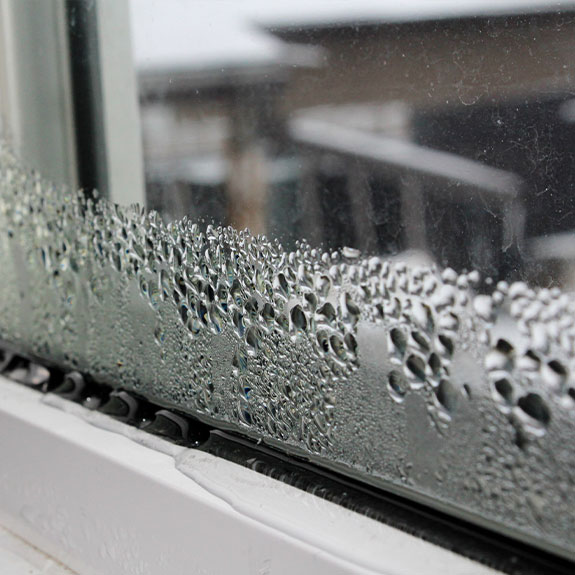
In our daily lives at home, we constantly generate water vapor: when we shower, cook, breathe, hang laundry indoors, or turn on the heat. This vapor remains suspended in warm air. However, when this moisture-saturated air comes into contact with cold surfaces—such as single-pane glass, aluminum window frames without thermal breaks, or a poorly insulated exterior wall—it cools rapidly.
As the air cools, it loses its ability to hold that water in a gaseous state and transforms it into liquid droplets. If this condensation occurs continuously day after day, the wall or surface remains damp, becoming an ideal breeding ground for the proliferation of mold spores.
Diagnosis: How to Distinguish Condensation from Capillary Action or Seepage
Before buying materials or jumping right into repairing a wall, it’s essential to identify the type of moisture you’re dealing with. Applying anti-condensation paint to a wall with a water leak or moisture rising from the floor won’t solve anything.
Here is a comparison chart to help you quickly assess your situation:
| Type of Humidity | Main Symptoms | Usual Location | Main Solution |
| Condensation | Fogged-up or dripping windows in the morning; superficial black or greenish mold spots in corners, on ceilings, or on window frames. | Windows, ceilings, the upper corners of exterior walls, and behind heavy furniture. | Improve ventilation, control relative humidity with a dehumidifier, and improve thermal insulation. |
| Capillarity | Chipped paint, salt efflorescence (white powder), and blistered paint peeling off in strips from the floor upward. | Lower sections of walls on ground floors, in garages, or in basements (up to 1 or 1.5 meters high). | Injections of water-repellent resins into the base of the wall or chemical waterproofing barriers. |
| Filtration | A localized damp spot that darkens when it rains, direct water droplets, concentric rings, or cracks through which water flows directly. | Exterior walls, under roofs, areas near damaged pipes, or around deck joints. | Waterproof the exterior facade/roof or repair the source of the leak in the pipe. |
Quick Solutions: How to Remove Mold from Walls and Reduce Humidity Immediately
If you already have visible mold or wet windows every morning, follow this step-by-step guide to safely clean the area and mitigate the immediate impact.
Step 1: Cleaning and Sanitizing Mold
Never scrape off mold while it’s dry, because you’ll spread millions of invisible spores throughout your bedroom or living room, making your respiratory problem worse.
- Basic equipment: Wear rubber gloves and, if possible, a face mask.
- Applying a stain remover: Spray a cleaning product specifically designed for mold or diluted bleach onto the dark stains.
- Let it sit and rinse: Let the product sit for 10–15 minutes. Then, gently rub with a damp cloth or a clean sponge until all the dark pigmentation is removed.
- Drying: Wipe with a dry cloth and make sure the room is well ventilated to ensure the area doesn’t remain damp.
Step 2: Ventilate Your Home in Winter Without Losing All the Heat
There is a common misconception that you shouldn’t open windows in the winter to avoid wasting energy. Quite the opposite: a lack of fresh air is the number one cause of mold in the home.
- Express Cross-Ventilation: Instead of leaving a window slightly ajar for hours, open several windows on opposite sides of the room wide for just 10 or 15 minutes in the morning. This completely replaces the moisture-saturated air with drier outside air, without cooling the solid mass of the walls or the furniture.
- Make the most of the midday hours: If you’re at home, open the windows at noon when the outside temperature is mildest.
- Ventilate after activities that create moisture: Open the bathroom window immediately after showering, or turn on the range hood in the kitchen while you’re cooking.
Step 3: Strategic Use of the Dehumidifier and Heating
Managing your habits at home will help you keep the relative humidity between 40% and 60%, which is the healthy comfort range.
- When should you use a dehumidifier? A dehumidifier is a great temporary solution if you live in very humid areas or if you have to hang your laundry indoors. Place it in the room most affected by humidity, with the doors closed, to maximize its performance.
- Constant Heating: Keeping the heat at a consistent temperature (around 19–21 °C) prevents sudden drops in temperature on the walls. Avoid turning off the heat completely if the walls become freezing cold at night.

Renovation Solutions: How to Eliminate Condensation Moisture for Good
If, after changing your ventilation habits, condensation continues to form on the windows or mold keeps coming back every winter, it’s time to address the weak spots in your home’s envelope.
1. Replace the windows: Thermal Break (RPT) and double glazing
If your windows are made of old-style aluminum with single-pane glass, the metal acts as a direct conductor of the cold from outside.
- Solution: Replace the windows with PVC or aluminum windows featuring a thermal break and double or triple low-emissivity glazing (with an argon gas fill). By insulating the inner surface of the glass and the frame from the cold outside, the frame’s temperature will rise and condensation will disappear immediately.
2. Thermal Insulation of Interior Walls
When the exterior wall does not have an adequate air space or lacks insulation, the wall becomes freezing cold on the inside.
- Interior wall lining with mineral wool or polystyrene: Building a small partition wall out of gypsum board (Plasterboard) with rock wool or reflective insulation incorporated inside provides thermal insulation for the bedroom, eliminating the cold wall.
- Blown-in Insulation in Air Spaces: If your building has a hollow air space, mineral wool or cellulose can be blown in without losing usable space inside the rooms.
3. Application of thermal and anti-condensation paints
In the Paratureforma catalog, we offer specific solutions to protect walls that are prone to these problems:
- Anti-condensation/thermal paint: These paints contain hollow ceramic microspheres that create an insulating layer on the surface. When you touch the painted wall, you’ll notice that it doesn’t feel cold to the touch, drastically reducing the likelihood that water vapor will condense on it.
- Antimicrobial paint with mold-resistant properties: Formulated with slow-release biocidal preservatives that prevent mold from taking hold or growing on the surface.
Conclusion
It is entirely possible to permanently eliminate window condensation and mold in your home when you tackle the problem by combining proper ventilation habits with the right insulation and treatment materials. Understanding the source of moisture in your walls is the first step toward transforming your home into a healthy, warm, and comfortable space throughout the winter.
At our online store, paratureforma, you’ll find everything you need to protect your home from moisture: from high-tech primers and thermal paints to insulation panels, waterproofing compounds, and professional-grade application tools.
Why does mold grow behind cabinets or headboards?
“Areas of stagnant air” form behind heavy furniture placed directly against exterior walls. Since heat doesn’t reach that space and the exterior wall is cold, moisture accumulates there without any air currents to evaporate it. Solution: Move the furniture at least 5 cm away from the exterior wall to allow air to circulate.
Can you paint directly over mold stains?
Never. If you paint over mold without first cleaning and disinfecting it, the fungus will break through the new coat of paint in a matter of weeks. First, you must clean the area with a mold remover, apply a sealing/bonding primer if the surface is damaged, and finally apply the mold-resistant paint.
Does drying clothes indoors cause condensation?
Yes, quite significantly. A load of damp laundry can release between 2 and 4 liters of water directly into the air in the room. If you can’t hang your laundry outside or use a dryer, place the clothes in the smallest room with the door closed and a dehumidifier running nearby.
Are PVC or aluminum windows better for preventing condensation?
PVC is a naturally insulating material, so it does not allow cold to penetrate indoors. Aluminum is also an excellent option as long as it features a high-quality thermal break that separates the exterior from the interior.