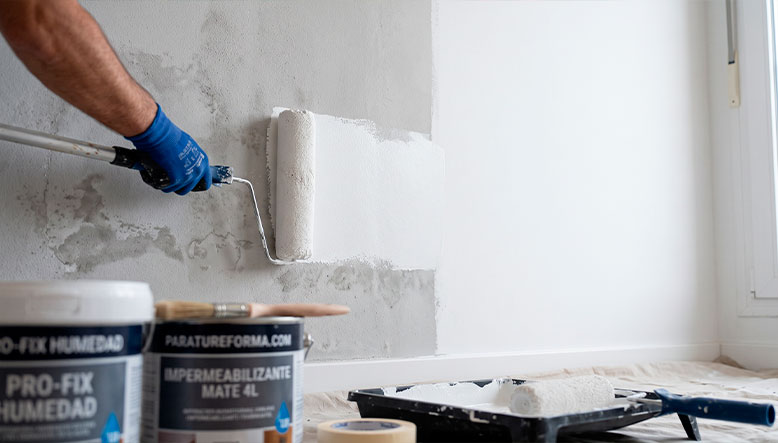
Dampness in homes is one of the most common and damaging problems in the field of home construction and maintenance.
Not only does it affect the appearance of rooms, damaging wall coverings and furniture, but it also poses a tangible risk to the respiratory health of occupants due to the proliferation of mold and spores.
Given this situation, moisture-resistant paint is often marketed as the ultimate solution. However, from a technical and analytical perspective, it is essential to question and debunk its effectiveness: Does it really work, or is it just a cosmetic fix?
To provide a thorough answer, we must analyze the nature of the problem, distinguish between the different types of moisture, and understand how these technical coatings work.

Understanding the Root Cause: Condensation vs. Seepage
The most common mistake in repairing interior walls is applying a surface treatment without first diagnosing the underlying cause of the moisture.
Moisture-resistant paint is not a miracle product; its effectiveness is intrinsically linked to the type of moisture we are dealing with.
Condensation Moisture
Condensation occurs when water vapor suspended in the warm air inside a home comes into contact with a cold surface (such as a poorly insulated wall or a thermal bridge), causing it to turn into liquid.
It is extremely common in areas with high steam production and poor ventilation, such as bathrooms and kitchens. It manifests as dark spots and surface mold colonies.
In this scenario, moisture-resistant paint—specifically those formulated with anti-condensation properties and fungicidal additives—does work both preventively and as a remedy.
These paints work by reducing thermal bridges and preventing mold from finding a favorable substrate on which to grow.
Moisture from Seepage and Capillary Action
In contrast, moisture from seepage occurs when water penetrates from the outside to the inside through cracks in the facade, defective roofs, or breaks in the plumbing system.
Capillary action, on the other hand, is the rise of water from the subsoil through the pores of building materials on the ground floor.
In cases of leaks or severe capillary action, no interior moisture-resistant paint will solve the problem at its root.
Negative hydrostatic pressure will eventually cause the paint layer to bulge and peel off, no matter how high-quality it is.
In these cases, paint should only be applied as a final finish after the source of water ingress from the outside has been repaired or chemical barriers have been injected into the foundation.
What Is Moisture-Resistant Paint, and How Does It Work?
To understand its benefits, it is necessary to analyze its composition. A professional-grade moisture-resistant paint differs from conventional acrylic paints in its microporous structure.
This formulation allows the wall to “breathe.” In other words, it is impervious to liquid water but highly permeable to water vapor.
If there is a small amount of residual moisture on the surface, the paint will allow it to evaporate gradually without causing blistering or peeling.
In addition, they contain powerful, broad-spectrum biocides and fungicides that chemically inhibit the growth of microorganisms, keeping the wall sanitized over the long term.
Debunking Quick Fixes
In the home renovation industry, misinformation can lead to unnecessary expenses. It is essential to clarify the following points:
- Myth: Paint can seal an internal water leak. Fact: Completely false. The water pressure will destroy the coating. A plumber must be called in.
- Myth: You can paint directly over mold to hide it. Fact: Painting over live spores without first disinfecting the area will only temporarily encapsulate the problem. The mold will eventually eat away at the paint from the inside.
Preparation Guide: Success Lies in Support
Proper application of a moisture-resistant paint depends 80% on the preliminary preparation of the surface. Skipping these steps will guarantee that the treatment fails. Below, we detail the technical procedure:
- Preparation of the affected area: Using a steel putty knife, remove all old paint that is blistered, peeling, or not adhering properly. You must remove the paint down to the solid base of the plaster.
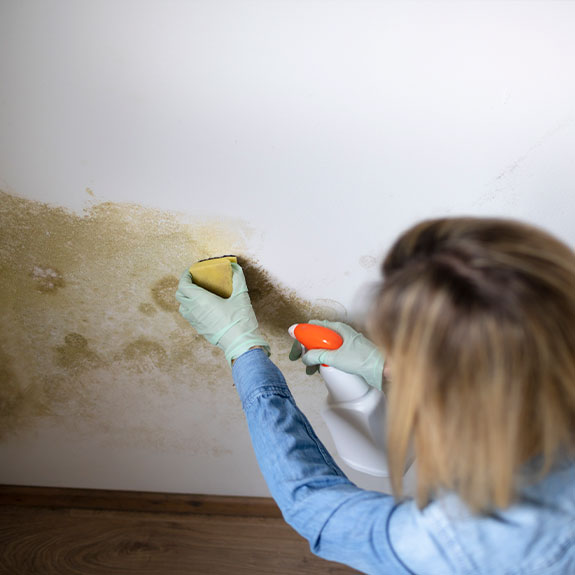
- Mold Removal: Never scrub mold when it is dry, as this will spread the spores throughout the room. Apply a specific fungicide solution or a mixture of water and bleach, scrubbing with a sponge or stiff-bristled brush.
- Thorough drying: The wall must be completely dry. Depending on the severity of the damage, it may be necessary to use industrial dehumidifiers or heaters for several days.
- Leveling Repairs: If the renovation process has left uneven areas on the wall, they should be filled with a moisture-resistant repair compound. Once dry, sand the area to even out the surface.
- Application of primer (if necessary): On highly porous or deteriorated surfaces, applying a bonding primer will ensure that the subsequent moisture-resistant paint adheres with maximum mechanical strength.
Application Process and Curing Times
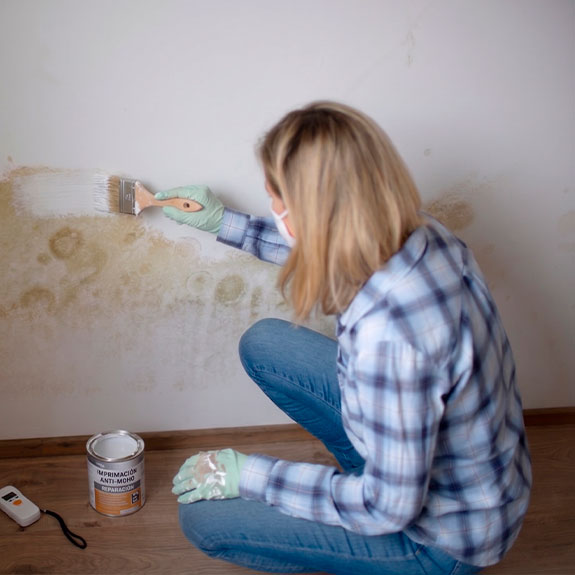
Once the surface has been cleaned, disinfected, and dried, application can begin. Technical paints require strict adherence to the manufacturer’s instructions.
As a general rule, a diluted first coat should be applied (according to the technical data sheet, typically between 5% and 10% water or a specific solvent) to promote penetration into the pores of the material.
The second coat should be applied undiluted, strictly adhering to the recoating intervals.
It is essential to maintain proper ventilation during application and drying to allow the solvents to evaporate properly and the polymer to cure.
Conclusion: A Technical Tool, Not a Quick Fix
In conclusion, moisture-resistant paint is a highly effective and technologically advanced solution when used in the right context.
It is the definitive solution to problems with surface condensation and the growth of microorganisms indoors.
However, it requires a thorough preliminary assessment: if water is seeping in from outside, painting should be the last step in the renovation, never the first.
Approaching the problem with this level of analysis ensures lasting and professional results.
Does moisture-resistant paint solve any wall problems?
No. It is highly effective as a preventive and remedial solution for condensation-related moisture. However, if you are experiencing exterior leaks or capillary action, you must first repair the root cause of the water ingress.
What makes this painting different from a typical work of art?
Its microporous formulation is key: it provides a waterproof barrier against liquid water but allows the wall to “breathe” and let water vapor evaporate. In addition, it contains powerful biocides and fungicides that inhibit mold growth.
Can I paint directly over mold stains to hide them?
No, this is a very common myth. If you paint over live spores without disinfecting the surface first, the mold will survive and eventually eat away at the coating from the inside.
What are the key steps for preparing a wall before painting?
The key to success is to remove the old, peeling paint, apply a fungicide treatment (never scrub while the surface is dry to avoid spreading spores), thoroughly dry the wall, and level it with moisture-resistant spackle.
Can moisture-resistant paint be used to seal a small leak in a pipe?
Absolutely not. No interior paint can withstand the constant hydrostatic pressure from a leak; the water will eventually cause the coating to bulge and peel off. In this case, you need a plumber.