The umbrella stands are indispensable elements to enjoy your garden or terrace at any time of the year. After all, they ensure the stability of this piece of furniture in windy weather and provide good shade.
But, what types of umbrella feet are there? How to choose the right one for you? These are some of the questions we are going to answer in this ParaTuReforma article. Don’t miss it!
Garden: a space for enjoyment
The garden is, without a doubt, the favorite area of the home for those who have one. In fact, if you have one too, we’re sure you agree with us. Enjoying the outdoors and a little piece of nature without having to leave the house is synonymous with life.
In addition, in the gardens it is not only possible to sunbathe, disconnect with a while of reading or take a dip in the pool. You also have the possibility to celebrate gatherings with family and friends around the barbecue.
However, to be able to do all this you need to provide some shaded areas. In many cases, the only way to achieve this is by using garden umbrellas attached with heavy bases to face the wind.
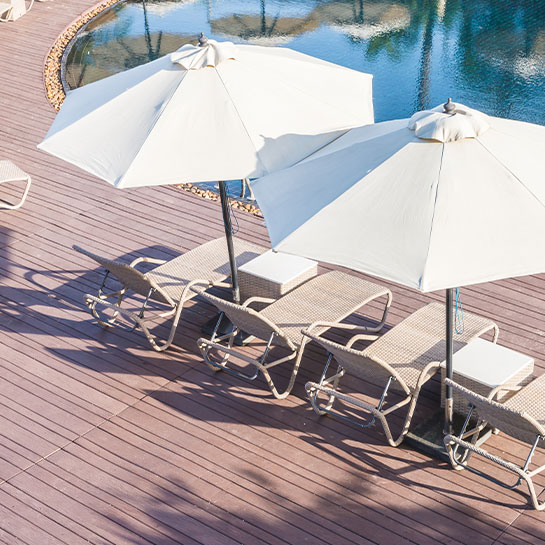
Garden umbrellas: an all-year-round solution
You may think that the garden is only for the summer.. If so, you’re wrong. If you decorate it according to the latest trends in landscaping, you can be sure that you’ ll look forward to using it all year round.
In this sense, an outdoor umbrella can not only protect you from the sun’s rays. It also has the ability to protect you from the rain if it is made of waterproof fabrics. Therefore, it will offer you the possibility to make the most of your garden in any situation.

Which umbrella feet to choose?
The choice of the umbrella stand is conditioned by several factors. First of all, we must tell you about a standardized norm regarding its weight. Specifically, it states that this element must weigh 1 kg for every 10 cm of diameter of the parasol.
What does this mean? Well, if, for example, your umbrella has a diameter of 2 meters, the appropriate weight for the foot would be 20 kg. However, this is a general rule of thumb. If you live in a windy area, it’s a good idea to opt for a heavier model. Your safety and that of your family members depends on it, don’t forget!
Type of umbrella
There are two types of umbrellas on the market. Each of them requires a different type of base. Let’s take a look at them:
- Parasol with central pole. It is the parasol of all the life. In this case, the pole is placed in the middle of the parasol. In this case, the ideal is to opt for round feet that, due to their dimensions, can fit under tables or other similar pieces of furniture.
- Eccentric parasol. It is the most modern and original. It is characterized by having a pole that is not located under the parasol, which favors obtaining a greater amount of shade. It is recommended that you opt for bases formed by slabs and counterweights.
Refillable or conventional?
Refillable umbrella feet have made life more comfortable for thousands of users. Specifically, they have a hole through which a certain amount of water or sand can be introduced, depending on the weight required by the base.
You also have the possibility to remove the liquid or sand to reduce the weight of the umbrella stand. This makes it much easier to transport and store when it is no longer needed.
Conventional parasol stands, on the other hand, have a fixed weight. Therefore, they are more suitable for gardens where the parasol is going to be placed in the same place all year round.
Material of manufacture
In case you end up opting for a refillable umbrella stand, the material used for its manufacture will always be ABS plastic or similar. It is very weather resistant and has a fairly low weight.
However, if you prefer a conventional one, the range of options grows considerably:
- Cement. One of the most advisable options due to its low price and great resistance. This material can be cleaned with a simple damp cloth and perfectly withstands humidity and wind. In addition, it can be covered with wood to give it greater aesthetic beauty.
- Stainless steel. As its name suggests, it is immune to corrosion and therefore very resistant to outdoor conditions. It should be cleaned without using abrasive products. Its only handicap is that it gets very hot when in direct contact with the sun.
- Wrought iron. A very heavy and resistant material. However, it must be covered with a sealant that prevents rain from producing corrosion. Any damage must be repaired as quickly as possible.
Stability and style
Considering what has been said so far, you can be sure that you will choose the right umbrella stand for you in terms of functionality. In fact, you will guarantee stability no matter how windy it gets.
However, you will have to choose based on aesthetic criteria. In this sense, try to make sure that the base has an aesthetic finish that matches the umbrella and the rest of the garden furniture. If you follow this maxim, you will be sure to get it right.
Variety of umbrella feet
This is all you need to know to buy the best umbrella stands for your garden. So, at this point, it only remains for you to take a look at the ParaTuReforma catalog. In it you will discover a wide variety of models able to meet all your needs in terms of style and functionality. And if this is not the case or if you have any doubts, please contact our customer service, we will advise you on everything you need!
How much should a garden umbrella base weigh?
As a general rule, the base should weigh 1 kg for every 10 cm of the umbrella’s diameter. For example, a 2-meter umbrella requires a base weighing at least 20 kg. In windy areas, it is recommended to increase this weight for added safety.
What kind of base do I need for my umbrella?
It depends on the design:
-Center-pole umbrella: round, compact bases, ideal for placing under tables.
–Off-center umbrella: bases with tiles or counterweights, which provide greater lateral stability.
Is a refillable umbrella base better than a fixed one?
Filling bases allow you to adjust the weight with water or sand and are easy to transport. Fixed bases have a constant weight and are ideal if the umbrella stays in the same place.
What is the most durable material for an outdoor umbrella base?
The most common materials are:
-Concrete: durable, affordable, and easy to maintain.
–Stainless steel: very durable and corrosion-resistant.
–Wrought iron: extremely sturdy, though it requires rust-proofing.
–ABS plastic: lightweight and weather-resistant in refillable models.
How can you combine stability and aesthetics in a parasol base?
Choose a base that complements the design of the umbrella and your garden furniture. There are models with decorative finishes that add style without compromising safety and stability.