Are you considering options that allow you to enjoy domestic hot water in your home? Then this article is of interest to you. Why? In ParaTuReforma we want to analyze the energy efficiency of an electric water heater in order to allow you to find out if it is really the appliance you need. Do not miss it.
Electric water heaters
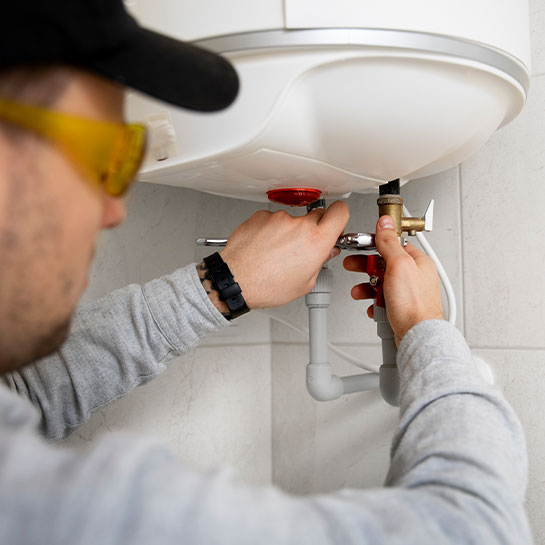
A electric boiler is a water tank with a certain capacity that contains a set of heating elements. These elements are in charge of raising the temperature of the water so that, later, it comes out through the faucets of the sink, the shower, the sink and the bidet according to the user’s demand.
Undoubtedly, it is a device that offers many advantages, which is why it has become one of the preferred options for users. Let’s take a look at them:
- Immediacy. Once the faucet is turned on, hot water comes out almost immediately.
- Ease of installation. Just drill a few holes in the wall, attach the hooks, and hang it up. Then, connect it to the water supply and a power outlet, and it’s ready to go.
- Sustainability. These types of water heaters do not use fossil fuels—such as butane or natural gas—to heat water. As a result, their emissions of pollutants are virtually zero.
- Low maintenance. Electric water heaters generally only require the annual replacement of the magnesium anode, which is designed to reduce water hardness. They also require an inspection of the safety valve and the heating element.
To all this we must add that an electric boiler does not require a minimum flow of water. This makes them ideal for environments where the liquid reaches the house with very little pressure due to the lack of its own group.

Consumption
The energy consumption of an electric boiler is very difficult to determine exactly. This is mainly due to the fact that many factors come into play. Most of them are related to the characteristics of the appliance itself, as you will see below:
- Capacity. Obviously, the larger the water tank capacity of the water heater, the more energy the heating elements will need to reach the desired temperature. Currently, almost all models on the market range from 50 to 200 liters. The choice will depend on the number of people living in the household.
- Tank insulation. Depending on the materials used in its construction, the water heater will be more or less effective at maintaining the temperature of the water stored inside it.
- Type of resistance. There are two types. Shielded heating elements come into direct contact with the water and therefore heat it up faster. However, they are very sensitive to limescale and have a relatively short lifespan. In contrast, ceramic-sheathed heating elements are less sensitive to limescale, but require more energy to raise the temperature.
Now, how do you calculate the energy consumption of an electric boiler? To do this, it is essential that you take a look at the technical data sheet of the device in search of two pieces of information: the power in kW (if it appears in watts, you only have to divide the figure by 1000) and the time in hours. Then multiply both figures and you will have the result in kWh.
Experts estimate that, according to the criteria discussed above, electric water heaters consume between 400 and 3000 kWh/year. As you know, the price of electricity has been very volatile for some time now, which makes it difficult to make an accurate calculation.
However, for reference, we can tell you that an electric water heater requires between €0.20 and €0.80 to heat one liter of water for a whole month. This is why it is so important to look at the energy efficiency label on the appliance.
Operation of electric water heaters
The operation of an electric water heater is extremely simple. Once installed and connected to the mains, the tank is filled with cold water. At that moment, the thermostat detects the temperature of the liquid and then proceeds to turn on the heating elements until the temperature indicated by you is reached.
Once the water temperature reaches this value, the heating elements turn off. They will only switch on again if you use hot water or if there are thermal losses.
Energy saving strategies
As is obvious, the electric boiler will have a significant impact on your electricity bill. However, by following the tips we are going to give you below, you will be able to optimize its operation and reduce it considerably. Pay attention:
- Choose a suitable location. Don’t make the mistake of installing the water heater in the basement or garage just to keep it out of sight. These days, there are models with attractive designs that blend easily into your home’s decor. That said, it’s crucial that it be located as close as possible to the kitchen and, above all, the bathroom. This will minimize heat loss through conduction as water flows through the pipes.
- Turn it off if you are going on a trip. Even if it’s just a three-day trip, it’s still worth it. However, you shouldn’t turn it off if you’re at home and need hot water constantly. Keep in mind that heating a large volume of cold water all at once takes more energy than doing it gradually.
- Select the temperature you need according to the time of the year.. Obviously, in winter you’ll need hotter water (between 60 °C and 80 °C). In summer, however, setting the thermostat to between 30 °C and 40 °C should be sufficient.
So finden Sie einen effizienten elektrischen Warmwasserbereiter
This is all you need to know about the energy consumption of an electric water heater. As advice we can tell you that you should always choose one that has the highest possible energy efficiency certificate, as you will amortize it quickly through your electricity bill.Contact ParaTuReforma if you have any doubts!
How much electricity does an electric water heater use per year?
The annual electricity consumption of an electric water heater typically ranges from 400 to 3,000 kWh, depending on its capacity, the insulation of the tank, the type of heating element, and daily hot water usage.
What capacity is most efficient for an electric water heater?
The most efficient capacity is the one that matches the number of people in the household.
-1–2 people: 50–80 liters
-3–4 people: 100–150 liters
-More than 4 people: 200 liters
Choosing a capacity that is too large unnecessarily increases water consumption.
Which heating element in an electric kettle uses the least amount of electricity?
Sheathed ceramic heating elements are more efficient in the long run because they are more resistant to limescale and maintain their performance for longer, thereby reducing breakdowns and energy loss.
What temperature should you set an electric water heater to in order to save energy?
Here’s how to optimize energy consumption:
-Winter: between 60 °C and 70 °C
-Summer: between 30 °C and 40 °C
If you set the temperature higher than necessary, electricity consumption will increase without providing any real benefit.
How do you choose an energy-efficient water heater?
The following points should be taken into account:
-Energy efficiency class (preferably A or higher)
-Good insulation of the storage tank
-Precise thermostat control
-Capacity that matches actual needs
An efficient model quickly pays for itself thanks to savings on your electricity bill.