Home heating is a very important issue. Keeping a house warm in winter is not usually easy or cheap in most cases. However, a cassette can solve this problem in a very efficient way.
A cassette is a type of fireplace that can be very interesting if you already have a previous installation, although it can also be made from scratch. In any case, in ParaTuReforma we want to tell you exactly what it is, how it is installed and what maintenance tasks it requires.
Chimney cassette
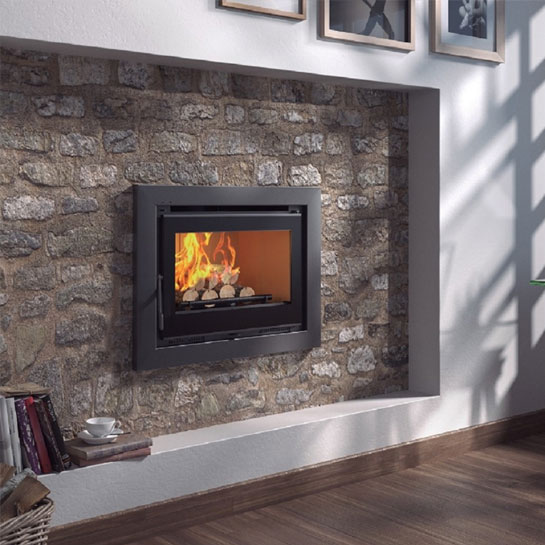
A cassette is a heating device made of steel or cast iron. It can be inserted into the hole where the fireplace was previously located as if it were a wood insert, although it is normal to install it from scratch.
Like the inserts, the cassettes have a chamber which, when closed with a glass ceramic glass, prevents direct contact with the flames. However, unlike them, they do not force the extraction of heat by means of fans, but allow it to occur naturally.
Nor should these heating devices be confused with wood-burning stoves, as they require a much more complex installation. We will see it below.
Installation of chimney cassette
In previous articles of this blog we explained how to make a wood-burning fireplace. In this sense, the installation of a cassette is much simpler, as you can see in this guide:
- Insert the extraction tube into the pipeline. Depending on the situation, it may be necessary to do this from the roof.
- Installing the insulation system. Fiberglass is typically used, or rock wool if fiberglass is not available. Its purpose is to prevent smoke damage and to temporarily secure the pipe.
- Putting the cassette in the wood-burning fireplace opening. It is very important that you make sure beforehand that the model you choose fits in the available space.
- Sealing the cassette to the recess. To do this, it is essential to use sealants with special heat-resistant properties, as otherwise the device could shift.
- Inserting the tube into the cassette. In other words, connect the exhaust to the combustion chamber.
After this last step, the only thing left to do is to give the aesthetic finish to finish installing the cassette . cassette fireplace cassette. For example, making a frame with special plasterboard or using a piece of masonry.
Maintenance of chimney cassette
The maintenance of the cassette basically consists of cleaning and chimney sweeping it. Here we tell you how to do it, although we already tell you that you will need some special products.
Clean the interior structure
First of all, you have to clean the ash that has accumulated in the ashtray during the last use. To do this, it is essential that you wait for it to cool down. You can use a shovel or, better yet, a vacuum cleaner.
Next, take a wire brush and scrub the inside walls of the cassette to remove any adhering combustion particles. Finally, rinse with a little water and let it dry naturally.
Clean the door
Now we are going to propose you a trick. Start by taking a sheet of newspaper and then moisten it a little. Subsequently, impregnate the sheet with ash and rub the glass. The results may be better than those offered by many specific glass cleaning products.
Chimney sweeping the cassette
The last step you must take to clean a chimney cassette. In this case, it may be advisable to hire the services of a professional chimney sweep, as it will be necessary to climb on the roof and perform the task at height. Specific products should also be used for this purpose.

Buying a chimney cassette
When buying a fireplace cassette, it is essential that you take into account a number of aspects. Let’s take a look at them.
The autonomy of the cassette
All fireplace cassettes have a tank in which the firewood is placed. The autonomy refers to the number of hours that these devices can heat the fireplace per full load. Experts say it should be between 10 and 12 hours.
Heating power
This aspect will depend, fundamentally, on the square meters of the surface you want to heat and the level of insulation of your home. For example, if your house has good enclosures and walls capable of retaining heat, 60 W to 80 W may be sufficient. On the other hand, if the insulation is not good, you will need between 100 W and 120 W of heating power to achieve the expected results.
Performance
This refers to the fireplace insert’s ability to convert fuel into heat. Currently, the best fireplace inserts achieve an efficiency of 80%. However, to reach that level, they must have a double combustion chamber, which significantly increases their price. Single-chamber inserts achieve around 70%, which is significantly higher than that of open wood-burning fireplaces (30–40%).
Materials of construction
Cast iron is undoubtedly the most robust, resistant and durable. However, it is also the most expensive, so many users opt for steel, which is much cheaper. This is a question that will depend, to a large extent, on the budget you have available.
Forced ventilation
As we have said, fireplace cassettes do not usually have forced ventilation systems, which is the case with wood inserts. However, some models have started to include them. The main advantage of this of this is that it will allow you to regulate the operating power of the device and bring the hot air to other rooms through ducts.
Undoubtedly, a cassette fireplace is a great option to heat your home. If you have any questions or want to ask for a quote, please contact ParaTuReforma. Our customer service will be happy to advise you on whatever you need.
What is a fireplace insert, and what is it used for?
A fireplace insert is a sealed heating system made of steel or cast iron that is installed inside a chimney. It improves thermal efficiency, reduces firewood consumption, and offers greater safety compared to open fireplaces.
Can a fireplace insert be installed in an existing fireplace?
Yes. Cassette fireplaces can be installed in existing fireplaces as long as the opening is the right size and they are properly connected to the flue and the thermal insulation.
What kind of maintenance does a fireplace insert require?
Maintenance involves removing the ash, cleaning the interior and glass of the appliance, and sweeping the flue at least once a year. This ensures safe and efficient operation.
How much heat output should a fireplace insert have?
The power requirement depends on the square footage to be heated and the home’s insulation. In well-insulated homes, 60 to 80 W/m² is usually sufficient, while in homes with poorer insulation, 100 to 120 W/m² is recommended.
Which is better: a cast iron cassette or a steel one?
Cast iron is more durable and retains heat better, but it is more expensive. Steel is more affordable and heats up faster, making it a good option if you’re on a tight budget.