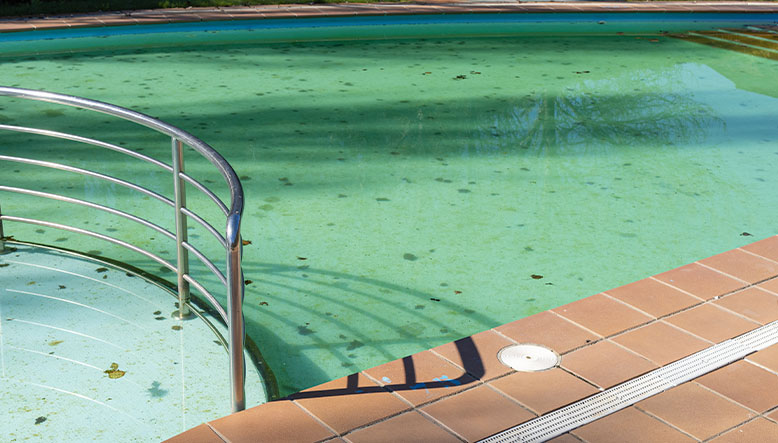
You’ve gotten your pool ready for the first swim of the season, and to your surprise, the water is cloudy and whitish. Don’t worry! This is a common problem that can be quickly resolved with a few simple steps.
This is a common problem that can be quickly resolved with a few simple steps.
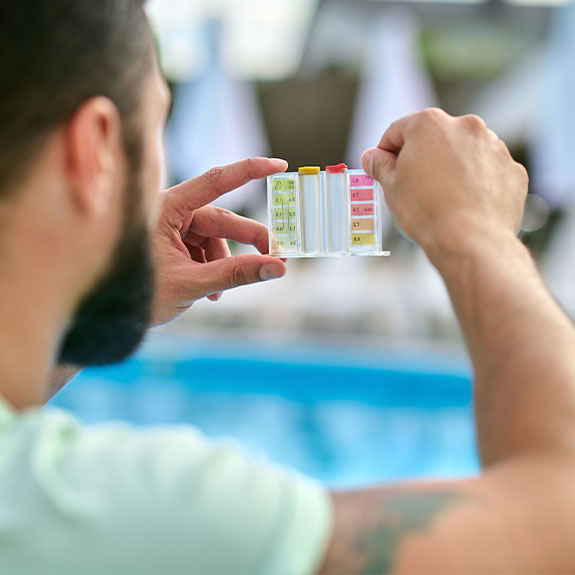
Check and adjust chemical levels: The first thing you should do is measure and adjust the pH and chlorine levels in your pool water. A pH level outside the ideal range can cause the water to become cloudy.
Make sure the pH is between 7.2 and 7.6, and adjust the chlorine levels as needed.
Clean and maintain the filtration system: A clean and efficient filtration system is essential for keeping the water clear

Check and adjust chemical levels
The first step in solving the problem of cloudy or whitish water in your pool is to check and adjust the chemical levels properly.
You should start by measuring the pH of the water, which is essential for ensuring the effectiveness of disinfectants and preventing cloudiness.
The ideal pH should be between 7.2 and 7.6. If the pH level is too high, it can cause cloudy water and skin irritation. On the other hand, a low pH can cause eye irritation and corrosion of surfaces.
If you need to adjust the pH, you can do so by adding specific products such as pH increasers or pH reducers as needed.
In addition to pH, it is essential to adjust the free chlorine levels in the water, which should be between 1 and 3 parts per million (ppm).
If the chlorine level is low, the disinfectant’s effectiveness is compromised, which can lead to the proliferation of bacteria and other microorganisms that affect water clarity.
To raise the chlorine level, you can use shock treatment, a process that helps remove unfiltered organic matter and disinfect the pool water.
Clean and maintain the filtration system
Proper maintenance of the filtration system is crucial to ensuring that the pool water remains clear.
You should start by backwashing and rinsing the sand filter or cleaning the cartridge, depending on the type of filtration system you use.
A clean filter in good condition is essential for removing the fine particles that contribute to water turbidity.
If the filter is dirty or clogged, it will not be able to properly trap impurities, resulting in a pool with cloudy water.
It is also essential to check that the filter pump and the piping system are in good condition and functioning properly.
Make sure the pump is fully operational to ensure proper water circulation and treatment.
Also, make sure that the filtration rate and pressure drop are appropriate for the volume of your pool to ensure efficient filtration.
Add a flocculant or clarifier
The use of a flocculant or clarifier is one of the most effective solutions for treating cloudy water, as it helps remove microscopic particles that cannot be trapped by traditional filters.
These substances bind and settle small impurities in the water, making it easier to remove them and improving the clarity of the pool water.
You can apply flocculant or clarifier according to the manufacturer’s instructions, and it is recommended that you do so in the late afternoon or evening, avoiding intense sunlight, to achieve the best results.
Remember that the flocculant works by causing fine particles to clump together, which are then removed by the filtration system.
It is important that, after adding the flocculant, you keep the filtration system running so that the clumped particles can be drawn into the filter, thereby helping to clarify the pool water.
Filter and vacuum the bottom
Once you have added the flocculant, it is essential to keep the filtration system running so that the settled particles and sediment can be captured by the filter.
Once the particles have settled at the bottom of the pool, use a pool vacuum to suck the sediment directly into the drain, preventing it from being stirred back up into the water.
This vacuuming process helps efficiently remove the impurities that cause cloudiness in the pool water.
Remember that filtering and vacuuming the pool floor are critical steps in ensuring the effective removal of particles and sediment, which will help restore the water’s clarity.
In addition, throughout the swimming season, it is important to maintain a regular cleaning and vacuuming routine to prevent the buildup of impurities in the pool water.
Prevention and Ongoing Maintenance
Once you’ve restored the clarity of your pool water, it’s crucial to establish an ongoing maintenance plan to prevent the water from becoming cloudy in the future.
This includes regularly cleaning the filtration system, checking and adjusting chemical levels, and preventatively adding clarifiers or flocculants as needed.
In addition, it is important to prevent organic debris, such as leaves or traces of sunscreen, from accumulating in the pool, as this can contribute to water cloudiness.
Take this opportunity to plan a weekly maintenance routine that includes brushing the walls, removing debris, checking alkalinity levels, and adjusting the pH and chlorine levels.
These measures will not only help keep the pool water in optimal condition, but will also help prevent cloudiness and ensure a pleasant and safe swimming experience.
Restore the clarity of your pool
By following all these steps, you’ll be able to effectively restore the clarity of your pool water and be ready to enjoy your first swim under optimal conditions.
Remember that consistent maintenance is key to ensuring that the water stays clean and crystal clear throughout the season, allowing you to enjoy a refreshing dip whenever you want.
Proper monitoring and adjustment of chemical levels, an efficient filtration system, and the use of specific treatments—such as flocculants or clarifiers—are essential steps for preventing and correcting pool water turbidity.
By following a regular and preventive maintenance plan, you can enjoy a clean and safe pool area for you and your loved ones.
Enjoy the perfect first swim
Now that you’ve followed all the steps to restore the clarity of your pool water, it’s the perfect time to enjoy your first refreshing swim.
Make sure the pH and chlorine levels are within the ideal range, take a dip in the crystal-clear water, and enjoy the feeling of freshness and cleanliness.
Remember that, after the first swim, it is recommended that you continue to monitor the chemical levels regularly and maintain the pool consistently to keep the water in perfect condition at all times.
Enjoy moments of fun and relaxation in your pool, knowing that you’ve taken the necessary steps to ensure a clean and healthy aquatic environment.
Take this opportunity to spend time with your loved ones and enjoy the experience of a refreshing and pleasant dip.
Always remember to prioritize safety and well-being when using the pool, and make the most of your aquatic recreation area.
Video Guide
For a visual guide to complement all the steps outlined above, we invite you to watch the following video, which will show you, in a practical and detailed way, how to remove cloudy water from your pool and restore its clarity: [REMOVE CLOUDY WATER from Your Pool | The Solution: Apply Flocculant—Water as Crystal Clear as on Day 1](https://www.youtube.com/watch?v=ZA3FdnjMDvU&utm_source=openai) .
We hope this comprehensive guide and the video will be of great help to you in solving the problem of cloudy water in your pool and enjoying a clean and safe swimming area at all times.
Remember that, at every stage of maintenance, consistency and attention to detail are key to ensuring the well-being and safety of everyone who uses the pool.
Don’t hesitate to follow these tips, and if you have any questions, always consult pool maintenance professionals.
Conclusion
In conclusion, having cloudy or milky pool water can be a frustrating problem.
However, this is a common problem for which there are several quick and effective solutions.
By adjusting the pH levels and keeping the filtration system clean, you’ll be able to solve this problem in the blink of an eye.
The first step is to measure and adjust the pH and chlorine levels. Maintaining a pH level between 7.2 and 7.6 is essential for a clean and healthy pool.
Next, be sure to clean and maintain your filtration system to effectively remove particles from the water.
Why has the water in my pool become cloudy or whitish?
This is usually caused by an imbalance in chemical levels (pH and chlorine) or because the filtration system is dirty and unable to trap the finest particles.
What are the ideal chemical levels for clarifying water?
For the disinfectant to work properly, the pH must always be maintained within a range of 7.2 to 7.6, and free chlorine levels must be between 1 and 3 ppm.
What exactly is a flocculant or clarifier used for?
These are chemicals that cause the microscopic particles that cloud the water (and that the filter cannot trap on its own) to clump together so that they sink to the bottom under their own weight.
How should I clean the pool after adding the flocculant?
Once the particles have settled to the bottom, you should use a manual pool vacuum to suck up all that sediment directly into the drain, preventing it from mixing back into the water.
What maintenance should I do to keep the water from becoming cloudy again?
It is essential to establish a weekly routine that includes washing the filter, brushing the walls, removing organic debris (such as leaves), and regularly testing the pH and chlorine levels.