







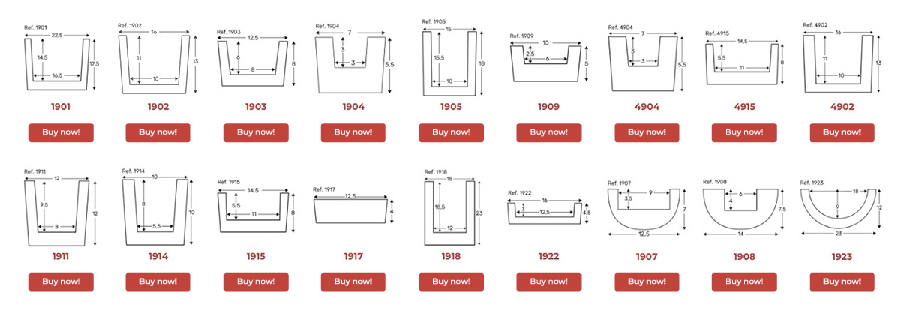




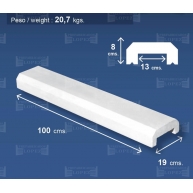
Flat base wall cover 100x19 (Pack 5 units)
Receive it between 8 and July 15.
€34.85
42,17 € VAT incl. 21%
 English



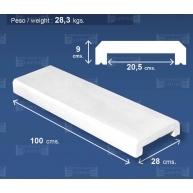
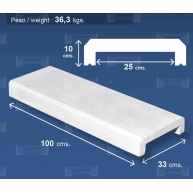
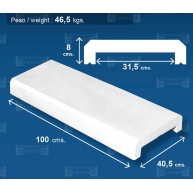
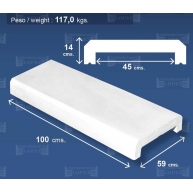
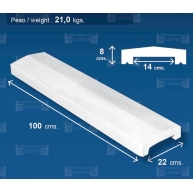
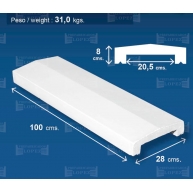
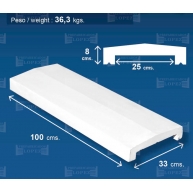
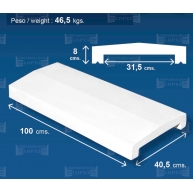
Frequently asked questions
The maintenance of these wall cappings is very simple. At ParaTuReforma, we recommend the following tips:
Regular cleaning
Protection against stains
Periodic inspection
Avoid impacts and knocks
Protection during nearby construction or works
Wall cappings are made from concrete. Thanks to this material, they offer special characteristics such as:
Excellent strength and durability
Various finishes
Adaptation to different styles
This product has several functions, among which the following stand out:
Protection: Wall cappings act as a physical barrier to protect walls from external moisture, rain, dirt, and other external agents that could damage the wall.
Aesthetic: They add a decorative touch, improving the visual appearance of walls and providing an aesthetic finish.
Durability: Wall cappings are made from highly durable materials, which enhance the longevity of walls by protecting them against potential damage and wear.
Wall cappings, also known as chaperons, are installed on the top of walls to provide a clean finish and protect the edges of the structure. These pieces facilitate water drainage, prevent water from penetrating the walls, and help avoid stains and dampness on the façades.
The installation of wall cappings can vary depending on the material used. Some of the most common materials are polymer concrete, lacquered aluminium, stone, and ceramic.
Cappings are generally fixed using mortar, adhesives, or mechanical fastenings.
For polymer concrete cappings, a cement bed is applied on the wall where the capping will be installed. After spreading the cement, the capping is placed on top, creating a barrier that prevents rainwater infiltration and stops sliding along the walls.
In summary, wall cappings are essential elements in construction to protect and beautify walls, and their installation can vary depending on the material, although it is generally done using mortar, adhesives, or mechanical fastenings.