












Select a Finder
Enjoy discounts of up to 30% only during the long weekend.

Ceramic leveling

 Producto recomendado

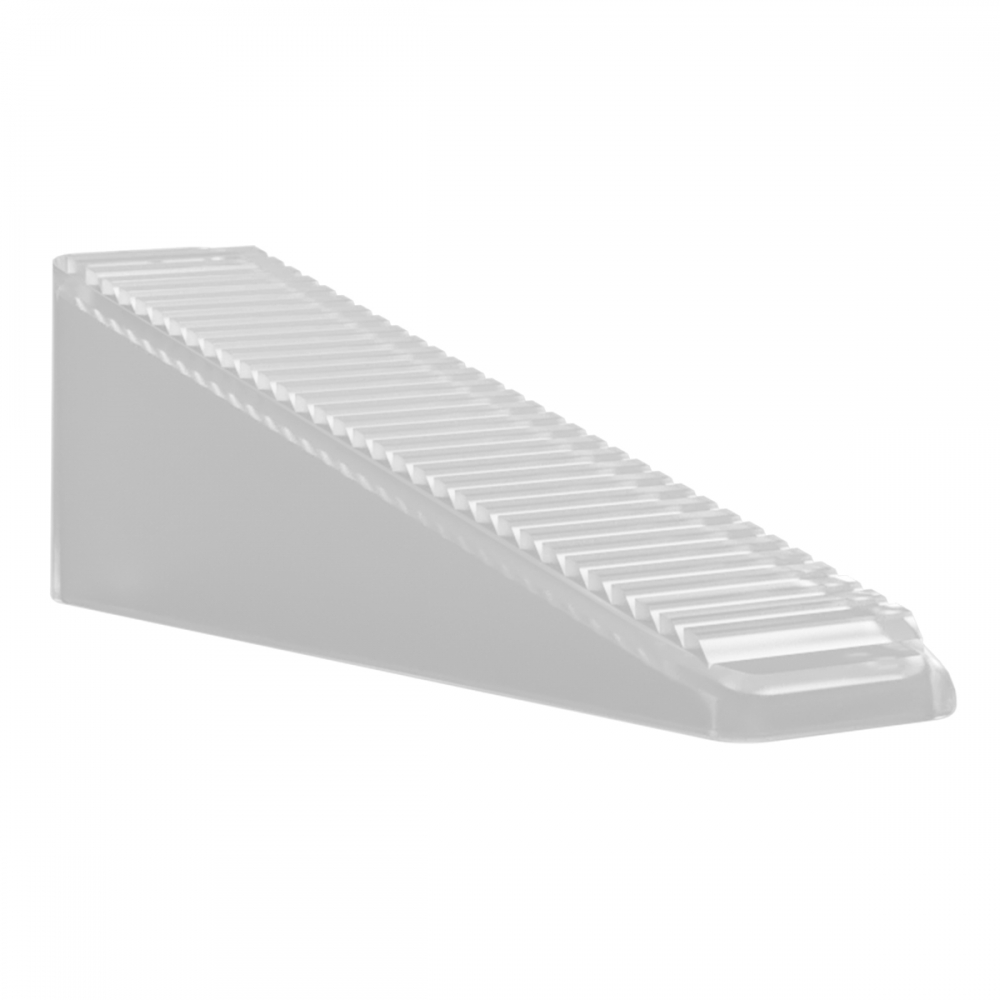
Transparent wedges for the Peygran system (Bag of 100 units)

Receive it between 9 and December 10.
On offer! 7,37 €


6,63 €
8,02 € VAT incl. 21%

Transparent wedges for the Peygran system (Bag of 100 units)

 Split your purchase from  €/mes with +info

 It can be yours for only in 3 months with +info

Tools and tools for the perfect levelling of ceramic tiles. To achieve a perfect leveling and finish in the installation of the tiles, we will use ceramic leveling systems. You will ensure a flatness between tiles.

Its main functions would therefore be:

  • Leveling of tiles and tiles
  • They prevent falls due to overhangs or irregularities
  • Avoid placement eyebrows
  • Prevents tile movement during setting application

It is an innovative tool for laying floor and wall tiles that guarantees a perfectly level and step-free finish.

They can be useful for ceramic tiling, such as knee pads, gloves, goggles, and a bucket for mixing mortar.

Precise installation of ceramic tiles and tiles. Crossheads are placed between the pieces to maintain even spacing between them, while wedges are used to tighten the spacers against the tiles and ensure perfect alignment

Innovative tool for pavements without guaranteed unevenness or steps.

Tiling accessories: knee pads, gloves, glasses, bucket for mixing mortar.

Tile Laying: spacers for spaces, wedges for precise and uniform alignment.

Frequently asked questions

At ParaTuReforma, we highlight several advantages of ceramic leveling:

  • Leveling: Corrects unevenness and slopes in the floor, creating a flat and uniform surface for installing ceramic coverings.

  • Time-saving: The ceramic leveling process is quick and efficient. Using self-leveling compounds reduces working time compared to traditional leveling methods.

  • Improved quality: By removing floor irregularities, a high-quality and aesthetically pleasing final result is achieved.

  • Durability: Self-leveling compounds have excellent strength and durability, ensuring a solid base for ceramic coverings and helping to prevent future issues like detachment or cracking.

Ceramic leveling is a process used in construction to create flat and smooth surfaces before installing ceramic coverings, such as tiles or slabs. This method is especially useful when a perfectly even and uniform finish is desired.

The main purpose of ceramic leveling in a construction project is to create a flat, smooth, and level surface as a base for installing ceramic coverings, such as tiles or slabs. Ceramic leveling has several key objectives:

  • Uniform surface: It corrects unevenness, irregularities, and slopes in the floor, creating a flat and even base, essential for an aesthetically pleasing finish and to avoid future issues like gaps or poor adhesion of the covering.

  • Structural stability: Leveling the floor improves the structural stability of the installation surface, preventing tiles or slabs from cracking or loosening due to insufficient support.

  • Adhesion of the covering: Ceramic leveling provides a firm and stable surface on which the adhesive can bond optimally, ensuring a solid and long-lasting installation.

  • Prevention of installation problems: It helps avoid hollow spaces beneath tiles or slabs, floor creaking, or slippage of pieces during installation.

During ceramic leveling, some common mistakes that can occur include:

  • Insufficient floor preparation: Failing to properly clean the floor before applying the leveling compound can lead to adhesion issues and affect the final finish.

  • Poor mixing of the compound: Not following the correct water-to-compound ratio can cause problems with consistency and performance.

  • Inadequate leveling: Incorrect application of the self-leveling compound can result in an uneven or sloped surface, negatively impacting the installation and appearance of the ceramic tiles.

  • Insufficient drying time: Not allowing adequate drying and curing time before installing tiles can affect the adhesion and stability of the levelled floor.

  • Omission of reference points: Failing to set reference points or level marks can make it difficult to achieve a completely flat surface.

  • Ignoring substrate moisture: Applying the leveling compound on damp or moisture-prone floors without precautions can result in long-term damage.

  • Lack of control over temperature and environmental conditions: Temperature and humidity affect curing time and the performance of the compound. Ignoring these factors can lead to drying and curing issues.