Select a Finder
Discounts of up to 30% during the long weekend

Flue pipes

 Producto recomendado

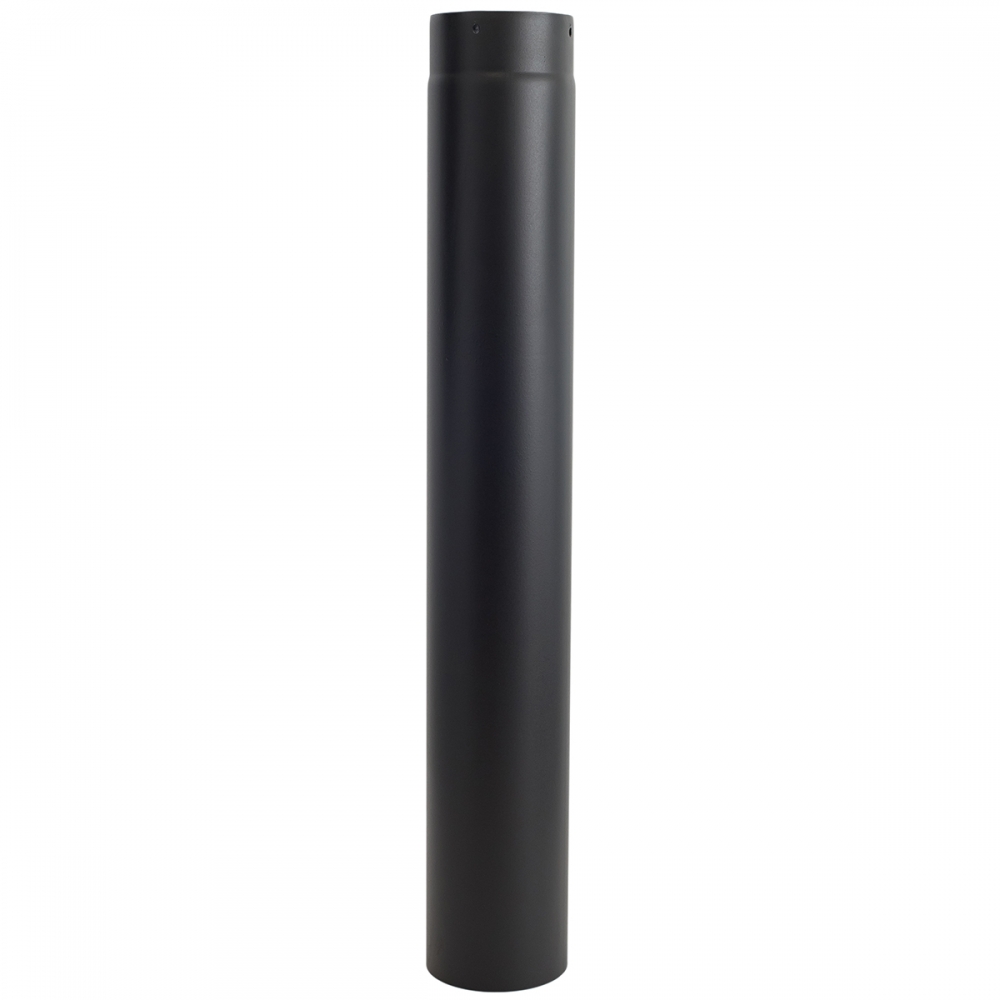
100cm matte black vitrified tube

Receive it between 10 and December 12.
On offer! 17,27 €


15,54 €
18,80 € VAT incl. 21%

100cm matte black vitrified tube

 Split your purchase from  €/mes with +info

 It can be yours for only in 3 months with +info

We have a multitude of accessories available to complete the installation of your fireplace, stove or pellet stove. You can also see the products needed for cleaning, maintenance and ignition, with which you will achieve better performance.

Visit the following categories and you can find a wide range of tubes, elbows, T-terminals, Chinese caps, discharge caps, clamps... All of this is available in various materials, as you can see, galvanized steel, vitrified steel and, our special range of pellet stoves, available in vitrified, stainless steel and double-walled, combining the two above.

Within each category you can find the specifications of each one, and also the applications for which they are designed, that way, you can find the best option for your installation.

Steel pipes coated with a layer of zinc to protect them from corrosion. This galvanizing process is carried out by immersion in molten zinc at high temperature or by electroplating

Popular choice for smoke evacuation in fireplaces and wood or pellet stoves. They are manufactured from galvanized steel coated with a layer of black vitreous enamel

They are smoke evacuation ducts made of galvanized steel and coated with a glossy black vitreous enamel

They are an aesthetic and functional solution for the evacuation of smoke in fireplaces and stoves. Its main feature is its matte black finish

They are an aesthetic and functional solution for the evacuation of smoke in fireplaces and stoves. Its main feature is its matte black finish

Essential components for the smoke outlet in pellet stoves and boilers. Made of stainless steel, they offer high resistance to corrosion, high temperatures and condensation

They are versatile elements and widely used in various industries, from the food sector to the oil and gas sector. They are characterized by high corrosion resistance, ability to withstand high temperatures

They are essential components for the exhaust fumes of biomass stoves and boilers that use pellets as fuel. Made of stainless steel

They are used to evacuate fumes and combustion gases in fireplaces, stoves and boilers. They consist of two concentric tubes: an inner one for the passage of hot gases and an outer one for thermal insulation

They are essential components for the exhaust fumes in pellet stoves and boilers. They are characterized by their construction with two stainless steel walls, separated by an insulating material, commonly rock wool

The maintenance of stoves is crucial to ensure their proper operation, safety and energy efficiency. Tasks vary depending on the type of stove

Galvanized steel tubes with zinc to protect them from corrosion.

Fireplaces and stoves: galvanized steel tubes with black vitreous enamel.

Galvanized steel flues coated with glossy black vitreous enamel.

Aesthetics and functionality in fireplaces and stoves with matte black finish.

Aesthetic and functional solution for fireplaces with a matte black finish.

Components for smoke outlet in pellet stoves, resistant stainless steel.

Versatile, used in various industries, resistant to corrosion and high temperatures.

They evacuate combustion fumes using concentric tubes for gases and thermal insulation.

Essential components for smoke outlet, with double insulated steel wall.

Household appliances heat water, differ in method and supply of heat.

Essential stove maintenance ensures efficiency, safety, and proper operation.

Tips for choosing tubes

Through simple steps you will know which should be the perfect pipe for your installation, essential for the correct functioning of your stove or fireplace, obtaining maximum performance and for the safety of your home.

The diameter of the pipe must match the smoke outlet of your stove or fireplace, our galvanized and vitrified products are available in various diameters and the special pellet range is available in 80mm diameter, the most common diameter for pellet stoves.

Tube material, each material has its applications and advantages, ensuring at all times a first quality, since these are certified products that have been subjected to exhaustive tests and quality controls.

The type of tube, you can find within the different categories the different applications of each of them. The fuel used in your fireplace or stove will also determine the type of pipe to use.

Installation recommendations

The installation of a T-terminal at the beginning, instead of an elbow, will facilitate cleaning, since a lid can be placed on the part of the terminal that is facing down and thus be able to remove all the material that is deposited. In pellet stoves this action is highly recommended.

Avoid accessories such as elbows or reductions in the first meters of the installation, in this way, you will improve the pull of the stove.

The most common is to use pipes of the same diameter throughout the installation, unless it is necessary to use a reduction.

The last pipe installed on the roof must protrude more than 1 meter above it. If we are on steeply sloping roofs, this minimum distance should be increased to 2.5 metres.

To install a chimney correctly, the following must be taken into account:

  1. The pipe must be installed in the correct direction of the fumes as indicated on the product label.
  2. The union between the pieces is made by means of a simple tongue and groove joining system , in which the female part must be at the top. Every 2 meters of installation it is necessary to attach a wall clamp to fix and secure the installation correctly.
  3. The conduit must be not less than 4 metres high and must exceed at least 1 metre the maximum height of the building itself, trees and other surrounding obstacles within a minimum radius of 10 metres. This installation must be finished with a terminal or cap. In installations over 4 meters, in the first section it is recommended to place a tube with a key or palometa which allows us to regulate the draught.
  4. When you need to make angles or elbows in the duct, avoid horizontal or downward runs. You need to make sure that the stove has enough draft so that the fire stays alive. Before the start of each season, it is advisable to clean the installation to remove any soot residues that may have accumulated.
  5. In the case where a metal chimney is inserted inside a brick chimney, the metal chimney must exceed the height of the brick chimney by protruding from the top.
  6. In stainless steel pipe, it is necessary to secure the joints between the parts by means of joint clamps.
  7. Condensation forms inside the duct when the smoke temperature approaches 100ºC. At this temperature the steam caused by the smoke mixes with the soot, sliding down along the walls of the tube. To prevent condensation and soot residues from coming out of the junction between the stove and the pipe, an ANTI-DRIP must be installed.

Certificates of pipes for fireplaces and stoves

The manufacture by Exojo has a certification accredited by ENAC (National Accreditation Entity), in ISO 9001:2008.

Other certifications of the manufacturer are the KIWA fireplaces certificate and the KIKA Production Control Certificate of Conformity.

Certificados de la fabricación de tubos para chimeneas

FACTORY PRODUCTION CONTROL CERTIFICATE OF CONFORMITY

The CE marking of a product symbolises compliance with all the EU requirements imposed. In compliance with the Construction Products Regulation (EU) 305/2011 of the European Parliament and of the Council of March 9, 2011, the notified body KIWA Cermet Italia SpA, has issued this certificate in favor of EXOJO, S.L.

PRODUCT CERTIFICATE

The European Union's single market has developed technical harmonisation by establishing common legal requirements for each type of material.

EXOJO, S.L. manufactures products certified by the KIWA organization Cermet Italia SpA, complying with quality requirements, based on tests, inspection of manufacturing processes and tests carried out with technical rigor. All this aimed at offering a product that generates trust and the quality it represents.

AENOR

The quality of EXOJO, S.L.'s production processes is endorsed by the AENOR seal.

Since 2001, EXOJO, S.L. has complied with all the necessary requirements in accordance with the UNE – EN ISO 9001:2008 Standard, for the production of pipes and fittings for the evacuation of fumes and gases, as well as for the marketing of stoves and their accessories.

The purpose of the Quality Management System is to satisfy EXOJO, S.L.'s customers, as well as to meet the requirements applicable to the quality of the product and those necessary to ensure the effectiveness of the service.

IQNET

In an increasingly globalised market, quality is an essential strategic factor.

EXOJO, S.L., its company and services are guaranteed by the prestigious international IQNET "Certified Management System" seal. It has implemented and maintains the Quality Management System and complies with the requirements of the ISO 9001:2008 Standard.

EXOJO, S.L. guarantees the quality of its products and services, as well as the satisfaction of its customers.

At EXOJO, S.L. we care about safety, which is why the CE marking guarantees the quality of our products, certified by the international certification and inspection body KIWA (FPC), in accordance with the EN1856-2: 2009 standard.

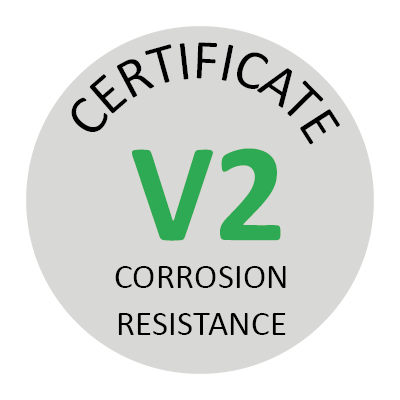
TEST V2

EXOJO, S.L. is the only Spanish manufacturer to have passed the V2 Test tests for corrosion resistance. The enamelled enamel provides exceptional resistance to corrosion due to condensation of the fuel. This makes our products suitable for smoke evacuation installations, both for solid fuels (firewood, pellets, coal, etc.) and for liquid or gaseous fuels.

Tubería para chimenea, estufa o estufa de pellet.

Frequently asked questions

For correct installation of male-female pipes, always position the male end down and the female end up. This prevents internal condensation mixed with soot from escaping through the joint and staining the pipe.

To achieve this, a drip sleeve is needed between the stove and the first pipe section, as well as a male-to-male sleeve between the last pipe and the extractor.

The first step is to check the diameter of your chimney’s flue outlet. Next, you need to measure and calculate the path the pipe will take until it exceeds the maximum height of the house by at least one metre. You should try to avoid installing elbows, as this can cause smoke to backflow.

Installing double-walled pipes is recommended in geographical areas with very cold temperatures to prevent the smoke from cooling as it travels through the flue pipe located outside the house. If it cools, it can backflow and end up coming out through the stove.

Rotary extractors are devices used to extract or ventilate air from a closed space. They operate through the rotation of the blades, creating an airflow that removes stale air, smoke, odours, or vapours from the environment.

They are commonly used in bathrooms, kitchens, warehouses, industries, garages, and ventilation systems in general. Their purpose is to improve air quality, eliminate odours, and maintain a cleaner and safer environment. It is important to follow the manufacturer’s instructions for proper installation and maintenance.